Holding the line on a complete overhaul of Iowa’s property tax system rather than making more modest changes, Iowa Senate Republicans on Wednesday passed their version of property tax reform — and did so with the full-throated blessing of most of their Democratic colleagues.
On a 41-4 vote, the full Iowa Senate approved Senate Republicans’ proposal for limiting homeowners’ property tax increases.
The bill, Senate File 2472, would cap city and county property tax revenue growth, reduce property tax revenue to schools while increasing state funding, create a graduated property tax exemption for homeowners 60 years and older, allow local governments to increase their local-option sales tax from 1% to 1.5% and tie the state gas tax to inflation.
The bill is one of three property tax proposals making their way through the Iowa Capitol: Senate Republicans, House Republicans and Gov. Kim Reynolds have each proposed legislation designed to property taxes, a topic that many state lawmakers say was their top priority coming into this year’s legislative session.
Ultimately, Reynolds and leaders in the Republican-majority House and Senate will need to agree on legislation to get something signed into law this year.
![]()
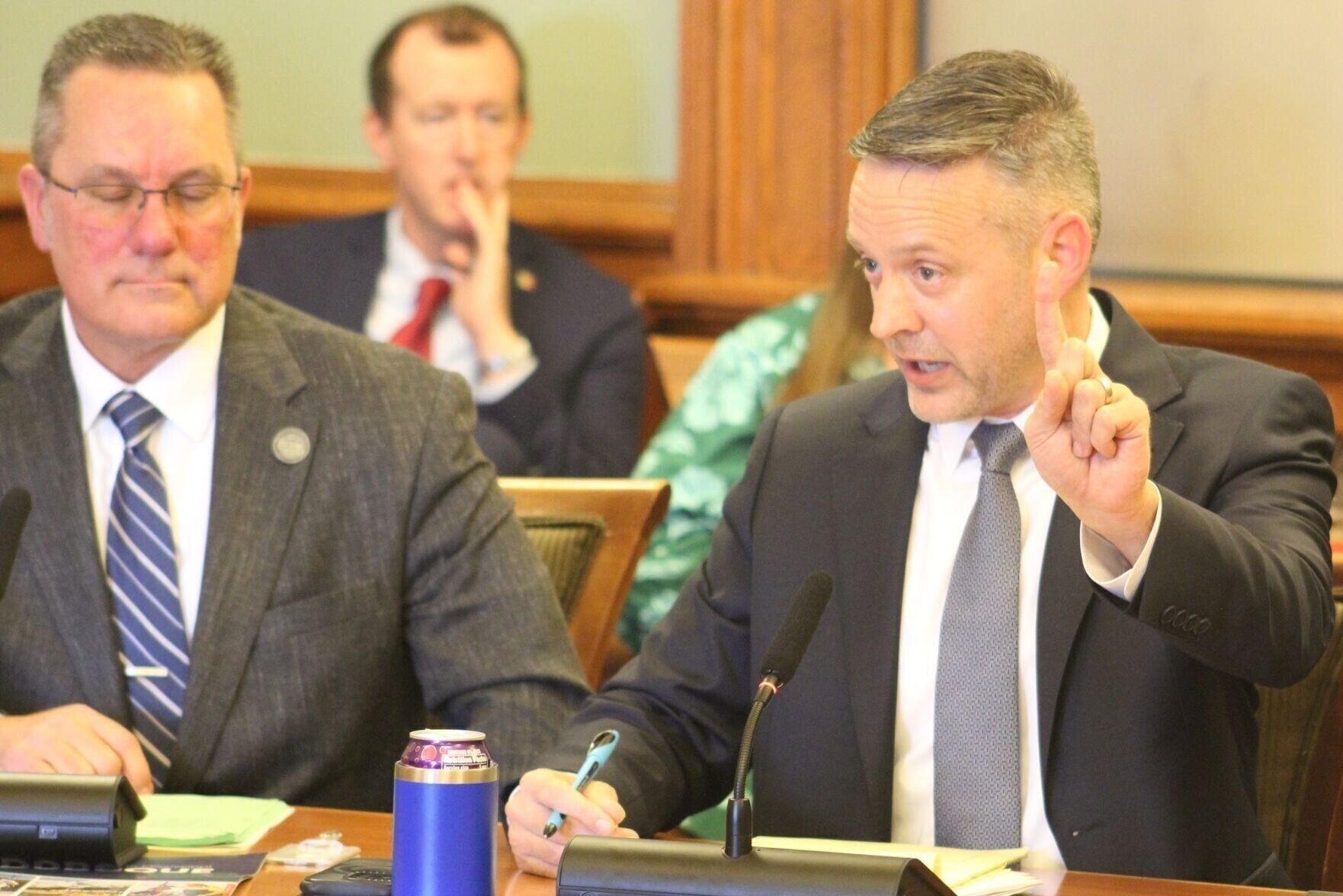
Iowa Sen. Dan Dawson, R-Council Bluffs, discusses proposed
property tax legislation during a Feb. 25, 2026, subcommittee
hearing at the Iowa Capitol in Des Moines.
Erin Murphy, Cedar Rapids Gazette
Iowa ranks among the highest-property-taxed states in the nation, with the 11th-highest property tax burden in the country, according to the Tax Foundation, and the 10th-highest effective property tax rate, according to Rocket Mortgage.
“As I’ve said before, this building not only has the opportunity, it has the responsibility to build a new property tax system,” Sen. Dan Dawson, a Republican from Council Bluffs who wrote the bill, said on the Iowa Senate floor during debate Wednesday. “To all my colleagues in the building: Let’s get this done.”
The bill approved by the Senate was the third iteration of Dawson’s proposal, which he has tweaked as it has gone through the legislative process. He described this latest version as a “good-faith effort” to move the bill closer to an agreement with the House and Reynolds.
At the same time, Dawson kept in the bill some of the pieces about which he has been passionate — ending the state’s decades-old rollback system and moving to a 50% exemption for most Iowa homeowners and indexing the state gas tax to inflation among them.
“You even heard Sen. (Tony) Bisignano comment, no more bandage approaches. We’ve got to rebuild this system,” Dawson said. “So I think there’s a general consensus in our chamber on that — that the past 20 years worth of efforts has not yielded anything different. We’ve got to do something entirely different here.”
![]()
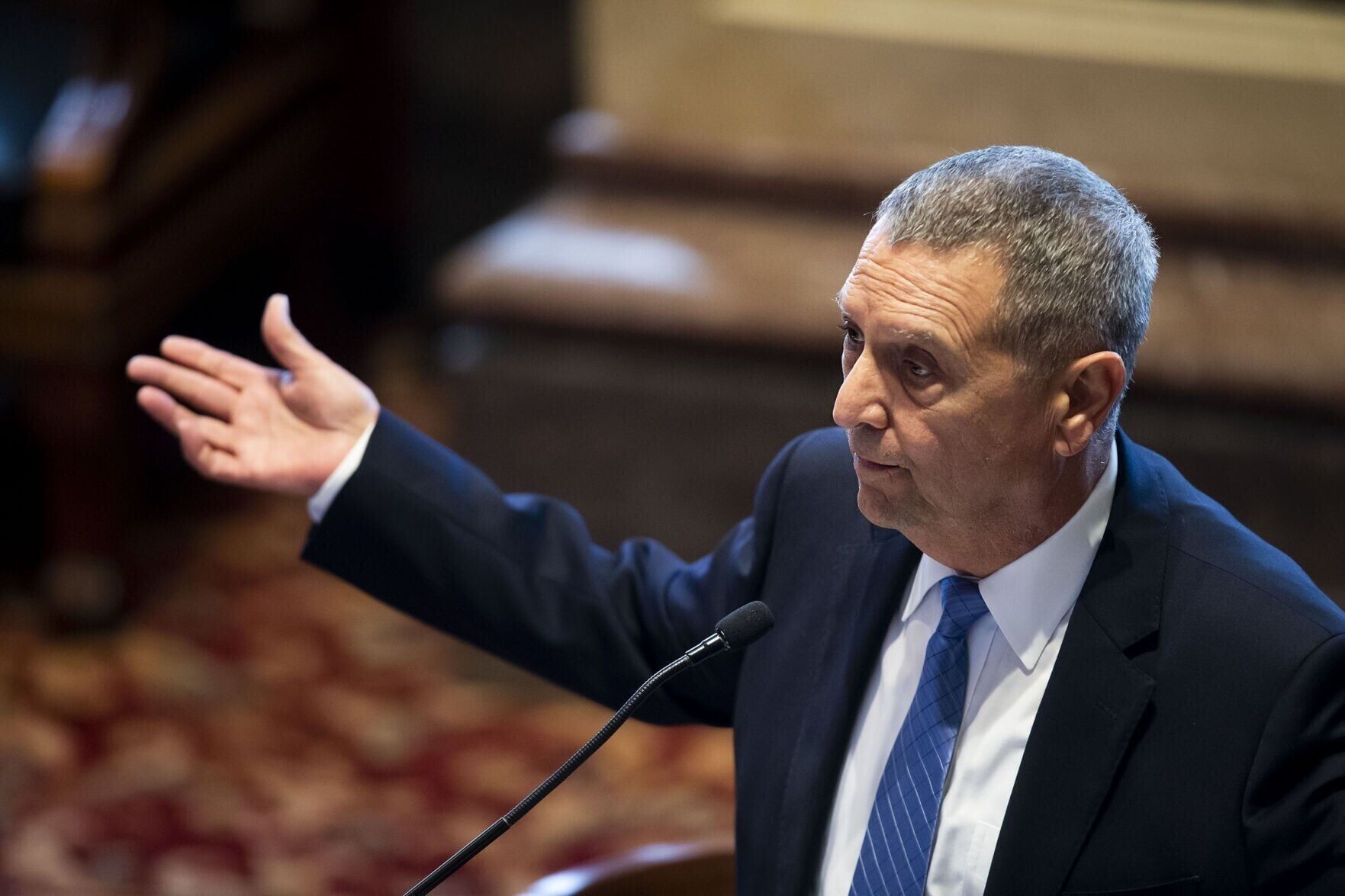
State Sen. Tony Bisignano, D-Des Moines, speaks in 2021 in the
Iowa Senate at the Iowa Capitol in Des Moines.
Kelsey Kremer, Des Moines Register via AP
Bisignano, of Des Moines, was one of 14 Democrats to vote in support of the legislation. Of the four who voted against the bill, three were Republicans — Sens. Mike Bousselot of Ankeny, Mike Pike of Des Moines and Doug Campbell of Mason City. Sen. Herman Quirmbach of Ames was the only Democrat to vote against the bill.
During debate, Bisignano praised the bill, Dawson and Senate Republicans for including minority-party Democrats in their work on the proposal.
“Are we going to agree at the end on all of it? Of course not. We all have little differences in the way we would approach. But there is no doubt that this bill helps the residential homeowner,” Bisignano said.
“So today, we’re just really taking the first serious step in letting the House and the governor know what parameters we have,” Bisignano said. “Will things have to change and compromise? Yes, that’s the way it works. But I have full confidence in Sen. Dawson carrying our message and standing our ground over in the House.”
The bill’s passage in the Senate makes it eligible for consideration in the House. House Republicans are likely to focus on their own proposal calling for less sweeping changes and ongoing negotiations between the chambers and the governor’s office.