Iowa state lawmakers neared the first legislative deadline of the 2026 session Thursday.
While numerous legislative proposals were halted, many others cleared the hurdle to continue on in the 100-day session, where hundreds of bills have been introduced so far.
This week is known as “funnel week” at the Iowa State Capitol, where bills must pass out of a subcommittee and full committee in either the House or the Senate to stay alive.
The official deadline for the first “funnel” was Friday, but lawmakers wrapped up their business Thursday as they typically convene Mondays through Thursdays. The next funnel in March requires bills to pass one chamber and a subcommittee and a full committee in the other chamber.
Bills related to state spending or tax policy are not subject to these deadlines. House and Senate leadership can also choose to resurrect bills at any point in the session by using procedural tools.
Republicans, who are marking a decade of majority control in both chambers, advanced proposals addressing eminent domain, school funding and a “tough on crime” agenda ahead of Friday’s deadline.
![]()
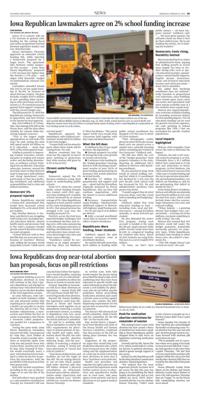
Iowa House Speaker Pat Grassley opens the first day of the
legislative session on Monday, Jan. 12, 2026, in Des Moines.
Katelyn Metzger, Quad-City Times
Numerous bills on libraries, DEI, vaccines considered, but few advance
House and Senate Republicans considered numerous bills aiming to restrict content in public libraries; roll back diversity, equity and inclusion policies; and weaken vaccine requirements, but few actually made it through the “funnel.”
Out of several library-related bills, Iowa House lawmakers advanced two out of full committee. One would prohibit Iowa public and charter schools from entering into agreements with public libraries to provide students with access to books and other materials. The other would transfer library oversight from city library boards of trustees to city councils.
A House bill prohibiting libraries from distributing “material harmful to minors” to children without parental consent, making any violation a criminal offense, was not considered in full committee.
And in the Senate, a bill repealing a section of the Iowa code that provides exemptions from restrictions on obscene materials that applies to public libraries was not brought to full committee.
House Speaker Pat Grassley, of New Hartford, noted Republicans will focus on increasing parental consent and notification around library materials as the library-related bills were narrowed down.
“I know there's been a lot of different bills, a lot of different conversations,” Grassley told reporters Thursday. “If there's explicit material that needs to be in a different section, that's something we need to discuss.”
![]()
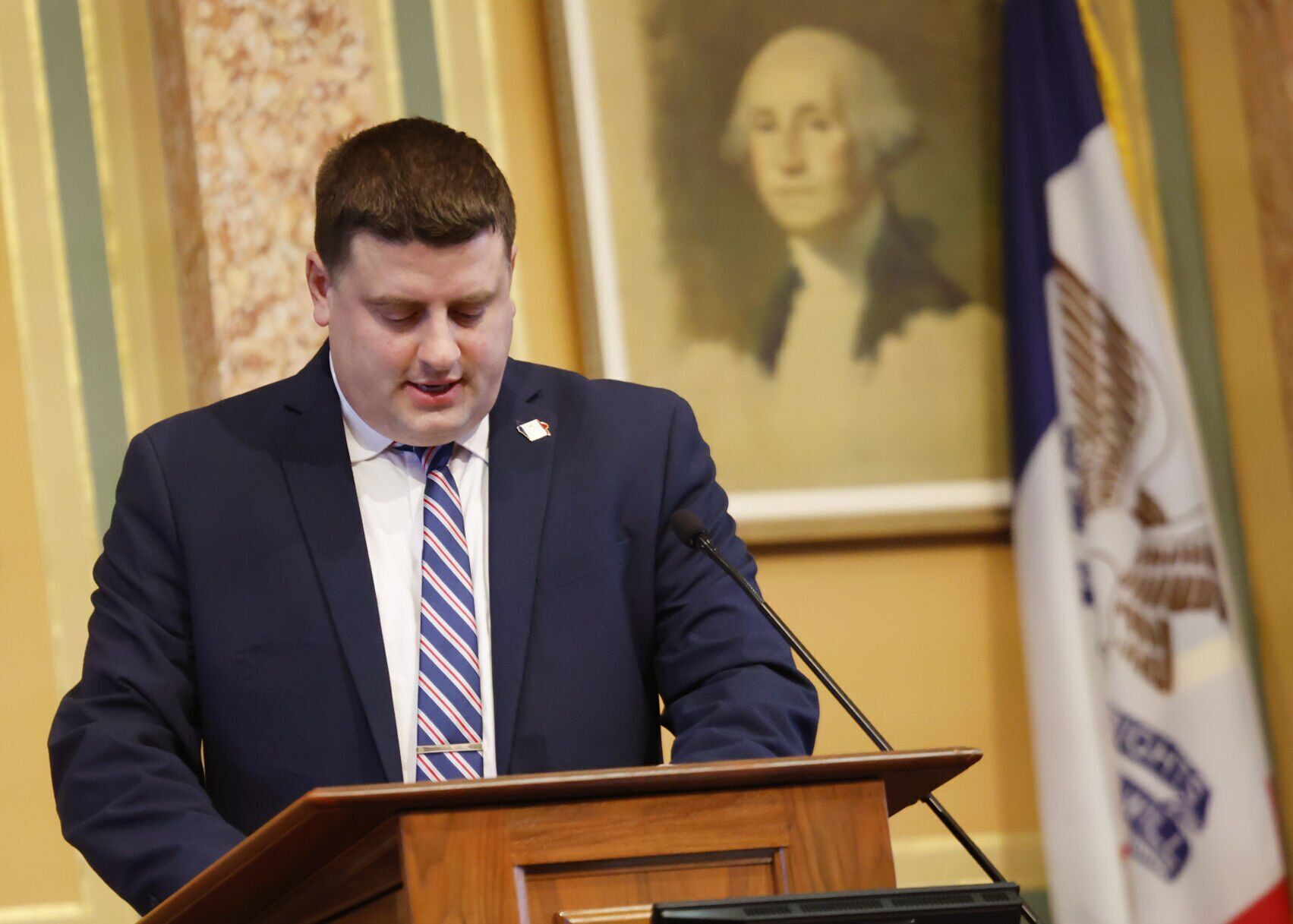
Senate Majority Leader Mike Klimesh of Spillville gives remarks
on the first day of the 2026 Iowa legislative session on Monday,
Jan. 12, 2026.
SAVANNAH BLAKE, Cedar Rapids Gazette
Senate Majority Leader Mike Klimesh, of Spillville, said that as a former mayor, he wants to “tread carefully when it comes to making changes to libraries,” noting the difficulties around building consensus on the legislation.
“As a mayor for 20 years, you know, I appoint the library trustees, and they're independent, right? And, you know, that relationship, I'm sure, in certain communities, it works well. In some communities, maybe doesn't work so well,” Kilmesh told reporters Thursday.
![]()
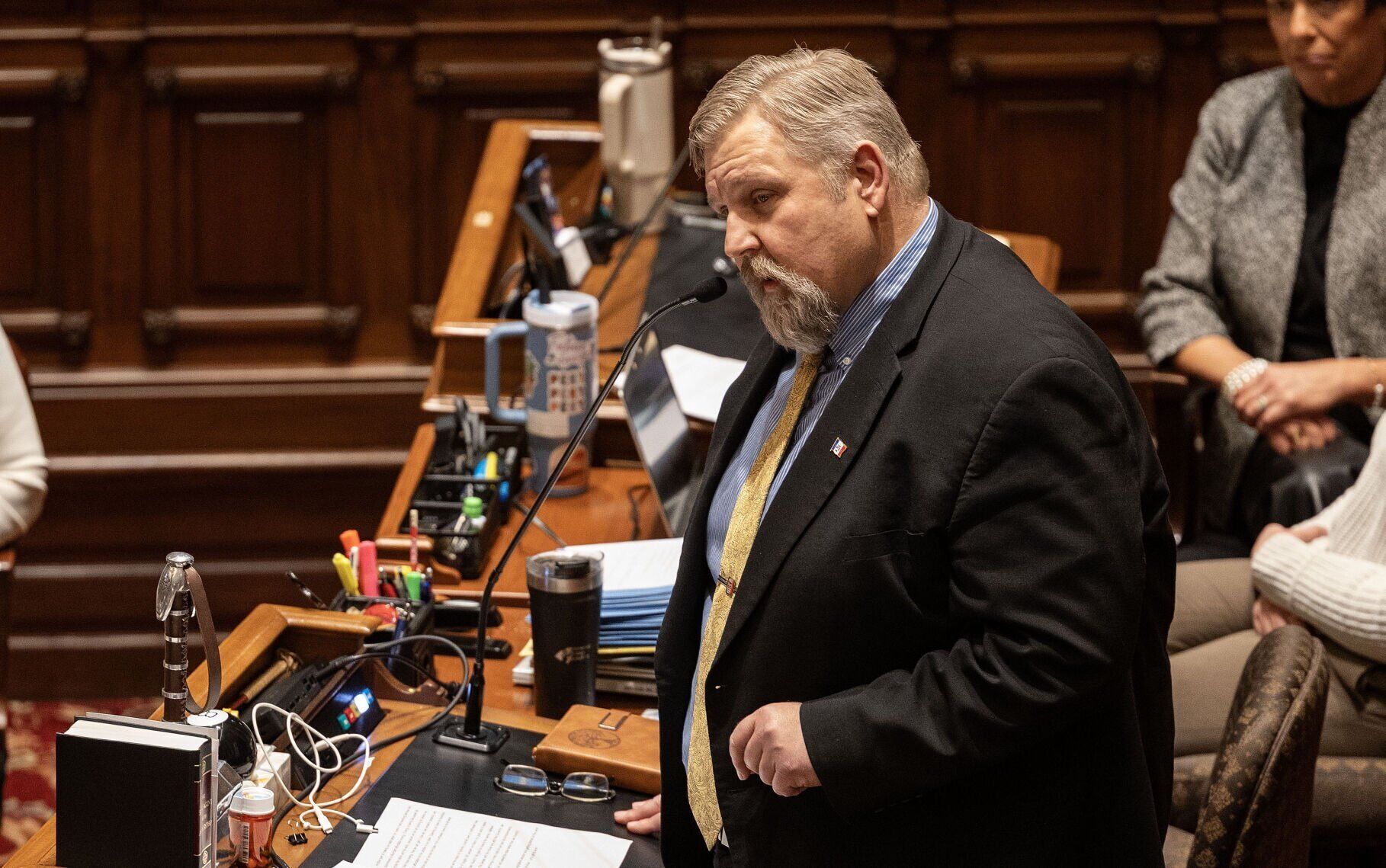
Iowa Rep. Brian Meyer, D-Des Moines, speaks to reporters at the
Iowa Capitol in Des Moines on Thursday, Feb. 6, 2025.
ERIN MURPHY, Cedar Rapids Gazette
Democrats criticize the Republicans for focusing on 'divisive' issues over affordability
House Minority Leader Brian Meyer, of Des Moines, said Republicans failed to advance legislation lowering costs for Iowans in the first month of the session. He pointed to Republican-pushed bills focused on allowing Iowa to absorb Illinois border counties and enticing the Chicago Bears to build the team’s new stadium in the Hawkeye State, calling them “not serious.”
“They focused on, again, divisive social issues that have nothing to do with anything that Iowans care about and we will stand firm with those issues from the Iowa House Democrats,” Meyer told reporters.
![]()
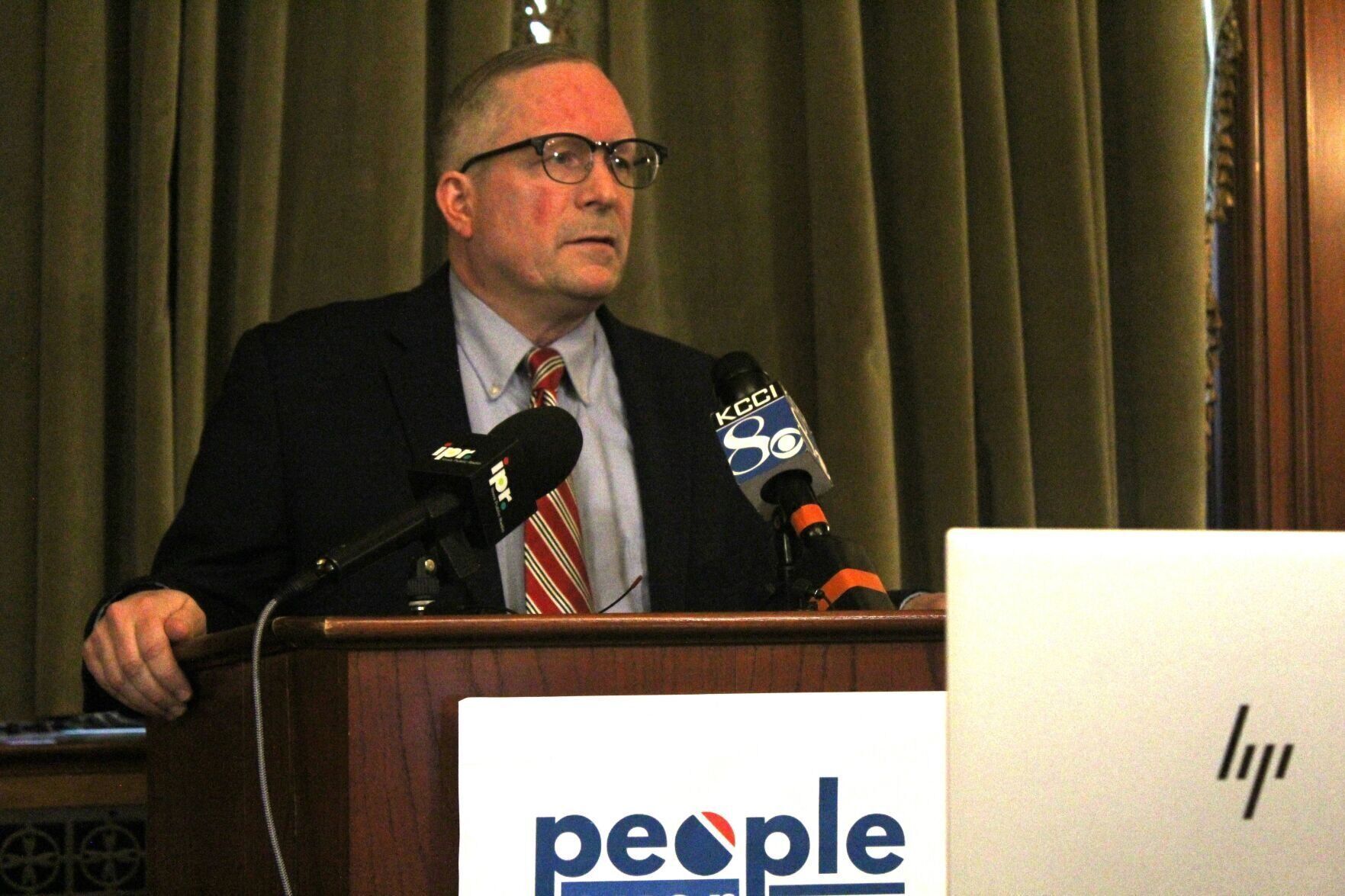
Senate Minority Leader Janice Weiner of Iowa City speaks during
the first day of the 2026 Iowa legislative session on Monday, Jan.
12, 2026.
SAVANNAH BLAKE, Cedar Rapids Gazette
During the second half of the session, Meyer said, Democrats plan to use procedural motions during floor debate to get Republicans on the record for issues, including affordability and protecting Iowans’ rights, during an election year.
Iowa Senate Minority Leader Janice Weiner, of Iowa City, said she was relieved to see a slate of bills fail to move forward, including the bill prohibiting libraries from distributing “material harmful to minors,” legislation allowing couples getting married to waive the option for no-fault divorce and House bills that would criminalize abortion.
She also applauded bipartisan support behind bills providing farmers with the right to repair, expanding the state public defenders pilot project on child welfare and increasing access to subacute mental health care.
House Republicans advance 'tough on crime' proposals
House and Senate Republicans advanced a number of “tough on crime” bills ahead of Friday’s deadline, aimed at discouraging violent and repeat offenders.
In January, House Republicans rolled out their three-part proposal, focused on longer sentences for habitual offenders, tighter bail standards and expanded public access to judicial performance data. It is one of their key priorities this session.
Ahead of the 2026 session, Grassley framed the package as necessary to keep Iowa from developing the kinds of public safety problems that have drawn national attention in larger Midwestern cities.
A bill, Senate File 2011, which would rewrite Iowa’s mandatory minimum sentencing and parole eligibility rules for a range of crimes, generally requiring offenders to serve a larger share of their prison terms before they can be released, failed to advance out of committee.