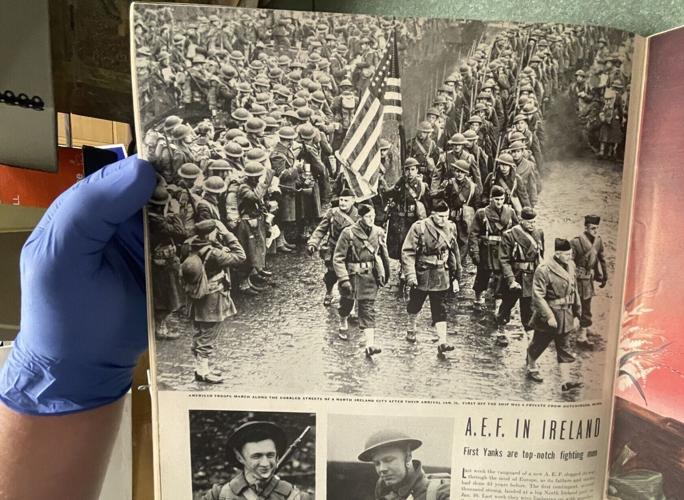
Life Magazine article from February 1942 showing Iowa soldiers in Belfast, Northern Ireland, the first to set foot on European soil during World War II.
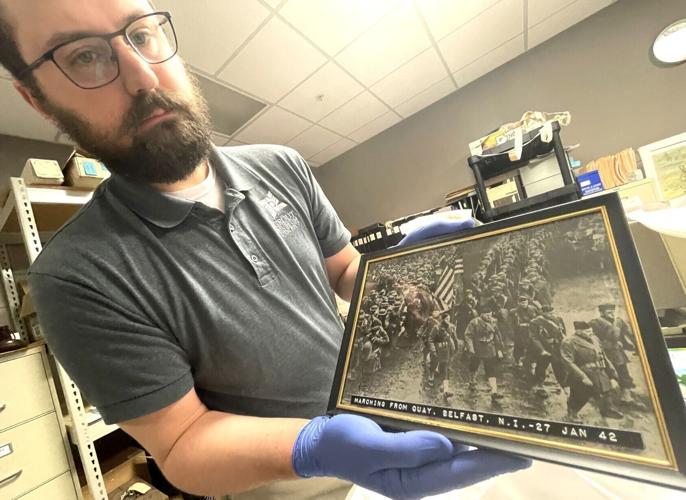
Nicholas Erickson, the Grout Museum's registrar, displays a copy of the Life Magazine photo showing Iowa soldiers in Belfast, Northern Ireland, the first to set foot on European soil during World War II.
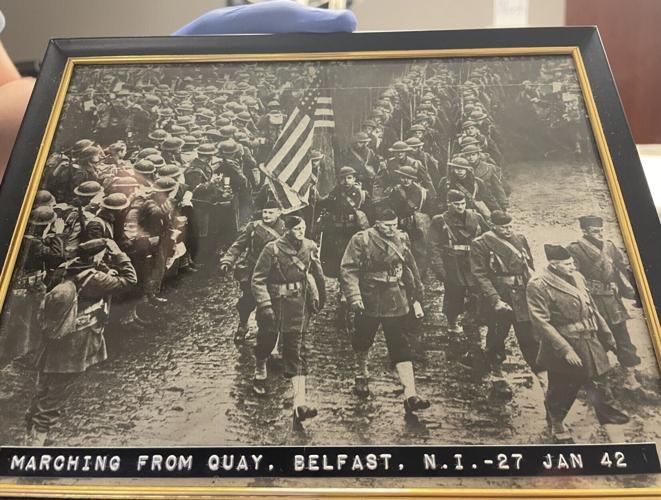
This flag is believed to be the first American flag brought into the European theater of war during World War II. The 133rd Infantry Regiment, based in Waterloo, were the first American troops to cross the Atlantic and come ashore at Belfast, Northern Ireland, on Jan. 26, 1942.
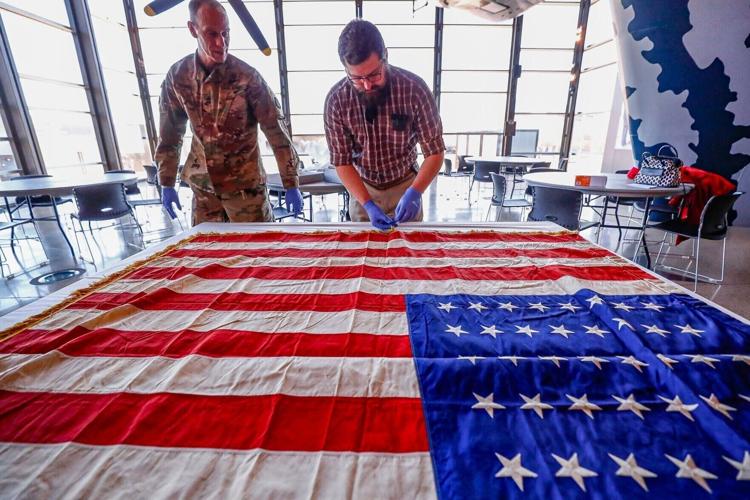
Grout Museum Registrar Nicholas Erickson and Sgt. Wade B. Corell of the 1st Battalion, 133rd Infantry Regiment of the Iowa National Guard unfold a 90-year-old American flag from its storage box in March 2023. The flag, gifted to the Grout Museum in 1960, is believed to be the first American flag carried ashore into the European Theater of Operations as the United States entered World War II.
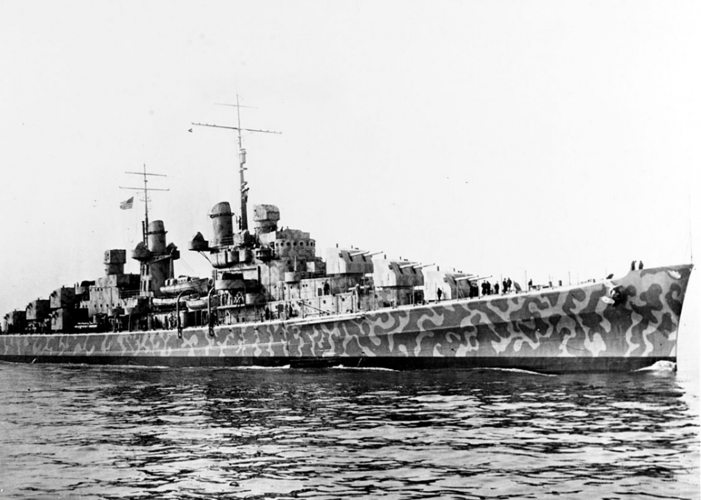
Commissioned in 1942, the light cruiser Juneau was sunk during the Battle of Guadalcanal that same year, killing 687 men, among them five siblings known as the Sullivan brothers. The brothers—George, Francis, Joseph, Madison, and Albert—enlisted on the condition that they’d be allowed to serve together, which the Navy agreed to despite a loosely enforced policy of separating siblings. After the incident, the military enacted policies to prevent more than one person from the same family from being killed in action and eventually named two destroyers USS The Sullivans in the brothers’ honor.
Nicholas Erickson, the Grout Museum's registrar, displays a copy of the Life Magazine photo showing Iowa soldiers in Belfast, Northern Ireland, the first to set foot on European soil during World War II.
Life Magazine article from February 1942 showing Iowa soldiers in Belfast, Northern Ireland, the first to set foot on European soil during World War II.
Commissioned in 1942, the light cruiser Juneau was sunk during the Battle of Guadalcanal that same year, killing 687 men, among them five siblings known as the Sullivan brothers. The brothers—George, Francis, Joseph, Madison, and Albert—enlisted on the condition that they’d be allowed to serve together, which the Navy agreed to despite a loosely enforced policy of separating siblings. After the incident, the military enacted policies to prevent more than one person from the same family from being killed in action and eventually named two destroyers USS The Sullivans in the brothers’ honor.
Grout Museum Registrar Nicholas Erickson and Sgt. Wade B. Corell of the 1st Battalion, 133rd Infantry Regiment of the Iowa National Guard unfold a 90-year-old American flag from its storage box in March 2023. The flag, gifted to the Grout Museum in 1960, is believed to be the first American flag carried ashore into the European Theater of Operations as the United States entered World War II.