Proposals to require mandatory sentences for repeat offenders was approved and remains eligible for further consideration this year by state lawmakers.
So, too, did a proposal to limit the Iowa governor’s authority during public emergencies and establish continued state government funding if state lawmakers or the governor reach an impasse in budget negotiations.
On the other hand, a proposal to require by law the private management of the state’s Medicaid program did not earn sufficient support and fell by the legislative wayside at the end of Thursday.
It was a momentous final 24 hours to the 2026 session of the Iowa Legislature’s second “funnel” week, a deadline that requires policy bills to earn a certain level of support if they are to remain eligible for continued consideration during a session.
By the end of this week, policy bills needed to be passed by the full Iowa House plus a committee in the Iowa Senate, or vice versa. Any policy bills that did not reach that standard are now considered “dead” for the rest of the 2026 session, which is scheduled to end April 21, though lawmakers often go into overtime.
The deadlines were created to narrow lawmakers’ focus and work as each session progresses.
There are caveats to the funnel deadlines: They do not apply to tax policy or budget bills, and legislative leaders have multiple tools at their disposal if they wish to resurrect any “dead” bills.
In fact, such plans were already afoot Thursday at the Iowa Capitol. The top Republican leaders of both the Senate and House said their members plan to give continued consideration to a bill that would require an in-person visit with a health care provider to receive an abortion pill in Iowa.
With the second and last funnel deadline in the rearview mirror, Senate Majority Leader Mike Klimesh, a Republican from Spillville who is in his first session in the leadership post, signaled content with the legislative work his caucus has done thus far.
“My job now is to ensure that our caucus is seeing their priorities through. And I feel, at the end of second funnel, we feel we’re in a pretty good spot,” Klimesh told reporters Thursday.
Democratic legislative leaders, on the other hand, expressed frustration with majority Republicans’ legislative agenda, which Democrats said does not address the issues about which Iowans are most concerned.
“The majority party’s priorities aren’t solving the problems that Iowans face every day,” Senate Minority Leader Janice Weiner, a Democrat from Iowa City, said Thursday. “It’s time to start flexing our ‘work together’ muscle memory and addressing the issues that Iowans actually care about.”
As the second funnel week wound down, a few major policy proposals were considering in committee hearings to decide their immediate legislative fate.
![]()
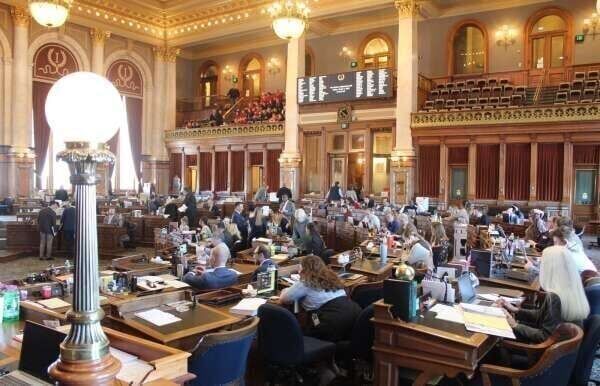
Activity in the Iowa House Chamber at the Iowa Capitol in Des
Moines on Thursday, March 6, 2025.
ERIN MURPHY, CEDAR RAPIDS GAZETTE
Private Medicaid management bill nixed
Negotiations over one bill exposed disagreement among majority Republicans in the House and Senate, with key provisions still in flux as leaders work toward a compromise.
House Republicans said they intend to strip out a key Medicaid provision from Senate File 2422, backing away from a proposal that would have cemented Iowa’s private Medicaid management system into state law.
The proposal would require the Iowa Department of Health and Human Services to deliver Medicaid benefits primarily through managed care organizations — the private insurers that administer most Medicaid services in the state. Critics told lawmakers the provision would lock Iowa into the privatized system created by then-Gov. Terry Branstad in 2015 through an executive order. Because the system was created administratively, a future governor could theoretically reverse it. Enshrining it in law, opponents say, would make that far more difficult.
SF 2422 advanced Thursday out of the House Health and Human Services Committee on a 13—8 vote, but Republican leaders signaled significant changes ahead as negotiations continue.
House committee Chair Austin Harris, R-Moulton, said the bill is “not in its final form by any means” and will likely look quite different by the time it reaches the House floor. “I want to make it clear that Iowa House Republicans do not have any interest in codifying managed care,” he said.
Even with the planned amendment, the broader bill continues to face opposition over other proposed changes.
SF 2422 is a wide-ranging measure aimed at tightening eligibility for Medicaid and the Supplemental Nutrition Assistance Program, or SNAP. The legislation would require stricter citizenship and immigration verification, mandate that all household income be counted when determining SNAP eligibility and limit retroactive Medicaid coverage for most adults. It also would require legislative approval for certain Medicaid waivers, creating new barriers to expanding services.
During committee debate, Democratic lawmakers raised concerns that limiting retroactive Medicaid eligibility could shift significant costs onto patients and hospitals.
Rep. Austin Baeth, D-Des Moines, said the bill goes beyond recent federal changes by prohibiting the state from seeking approval to extend retroactive coverage to most adults.
“Without it, hospitals will be on the hook for all of those accrued expenses,” Baeth said, warning the change could worsen financial pressures on Iowa’s health care system. About 7% of Iowans — roughly 130,000 people — are uninsured, he added, and the policy “could have horrible implications.”
Rep. Beth Wessel-Kroeschell, D-Ames, echoed those concerns, saying retroactive coverage exists because many people apply for Medicaid only after a medical crisis.
“That means someone can be eligible for Medicaid and still walk away with thousands of dollars in medical debt simply because they got sick before they could file paperwork,” she said.
Wessel-Kroeschell also criticized provisions affecting food assistance, warning that counting the income of all household members — even those ineligible for benefits — could reduce access to groceries for vulnerable Iowans.
“At the end of the day, this bill makes it harder to access food, harder to access health care and harder for some of the most vulnerable people … to get back on their feet,” she said.
Republicans on the committee emphasized that negotiations are ongoing between the House and Senate and that multiple provisions — including those related to Medicaid eligibility — could still change.
The bill now moves forward as part of broader discussions to reconcile competing “welfare reform” proposals.
![]()
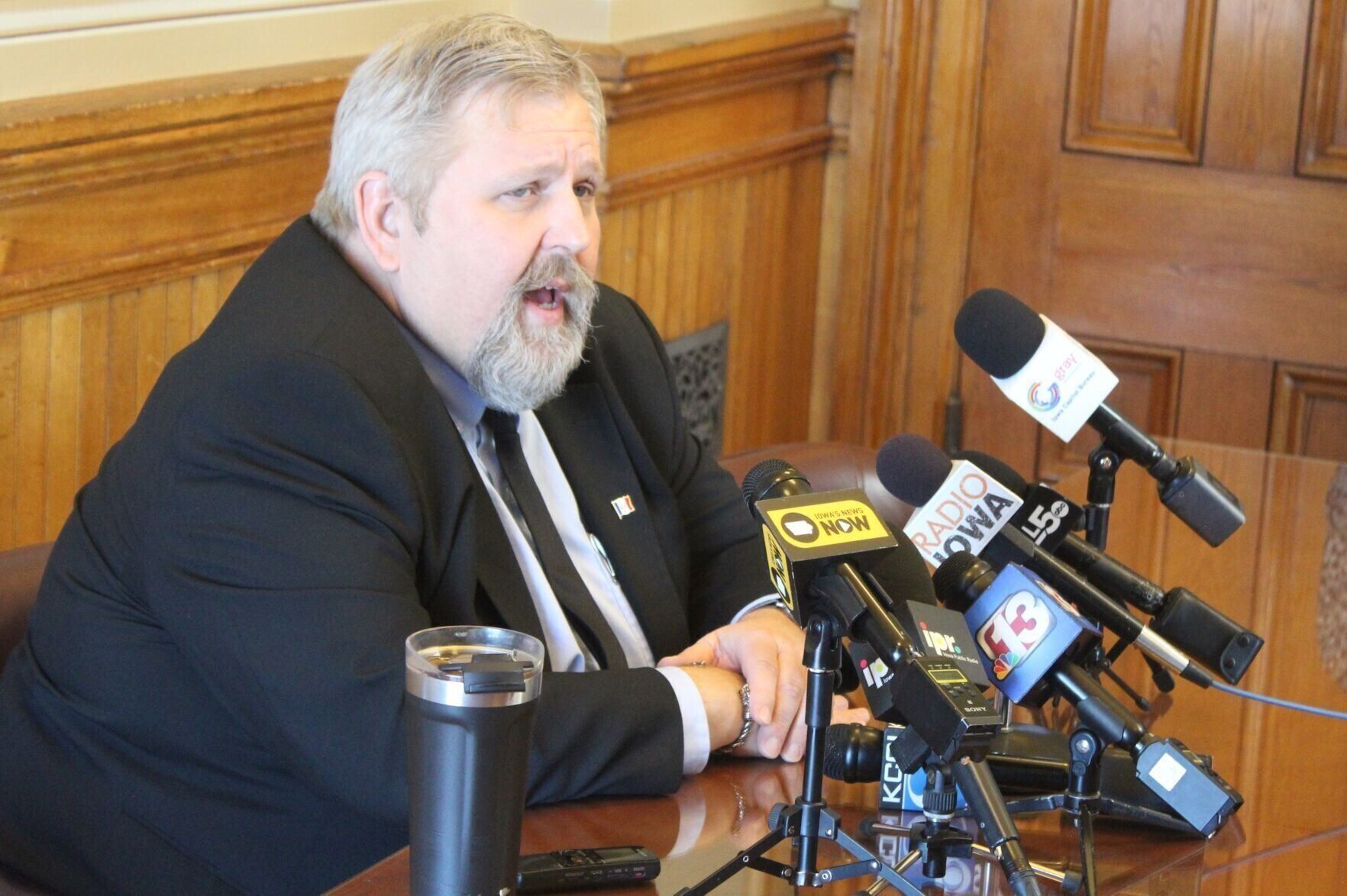
Iowa Senate Majority Leader Mike Klimesh, R-Spillville, speaks
to reporters during a press conference at the Iowa Capitol in Des
Moines on Thursday, March 19, 2026.
ERIN MURPHY, CEDAR RAPIDS GAZETTE
Bill limiting governor’s authority survives
State senators kept bills curbing the Iowa governor’s power alive days before the legislative deadline.
Republican Gov. Kim Reynolds is not seeking another term in office, which means Iowa will have a new governor.
Under one bill, House File 2694, Iowa’s next governor would be prohibited from closing places of worship, ordering businesses to shut down, mandating vaccines or changing election rules during a disaster emergency — an issue Republicans have been pushing for since the COVID-19 pandemic struck.
Supporters of the bill say it is a response to executive orders by governors during the beginning of the pandemic including limits on gatherings and mask mandates, which they say stymied personal freedoms.
But when Senate lawmakers advanced it out of committee Wednesday, they amended it to include another bill creating a method allowing state government to be funded and operate if ever the governor and Legislature do not reach agreement on a new state budget.
Klimesh, the Senate Republican leader, said the addition is necessary to ensure state resources continue to go to Iowans who rely on them in circumstances outside of the Legislature’s control.
“It’s important for us to realize the dysfunction in Washington and to do better, right to simply do better. And what this does is this sets the table for us not to go down the same path that Washington does,” Klimesh said.
Sen. Matt Blake, a Democrat from Urbandale, called the move political, arguing that it would prevent bipartisan negotiations and limit the power of a future Democratic governor. He noted that states with Democratic governors and Republican-led legislatures, including Kansas, North Carolina and Wisconsin, have similar continuing appropriation laws.
“This is not about people, this isn’t about some procedure, this isn’t worry about anything, this is blatant politics, a power play by the majority party hedging their bets about a new world that’s potentially coming in next year,” Blake said during the committee meeting.
Sen. Cindy Winckler, a Democrat from Davenport, said the provision would give lawmakers a way to avoid getting important work done during the legislative session.
![]()
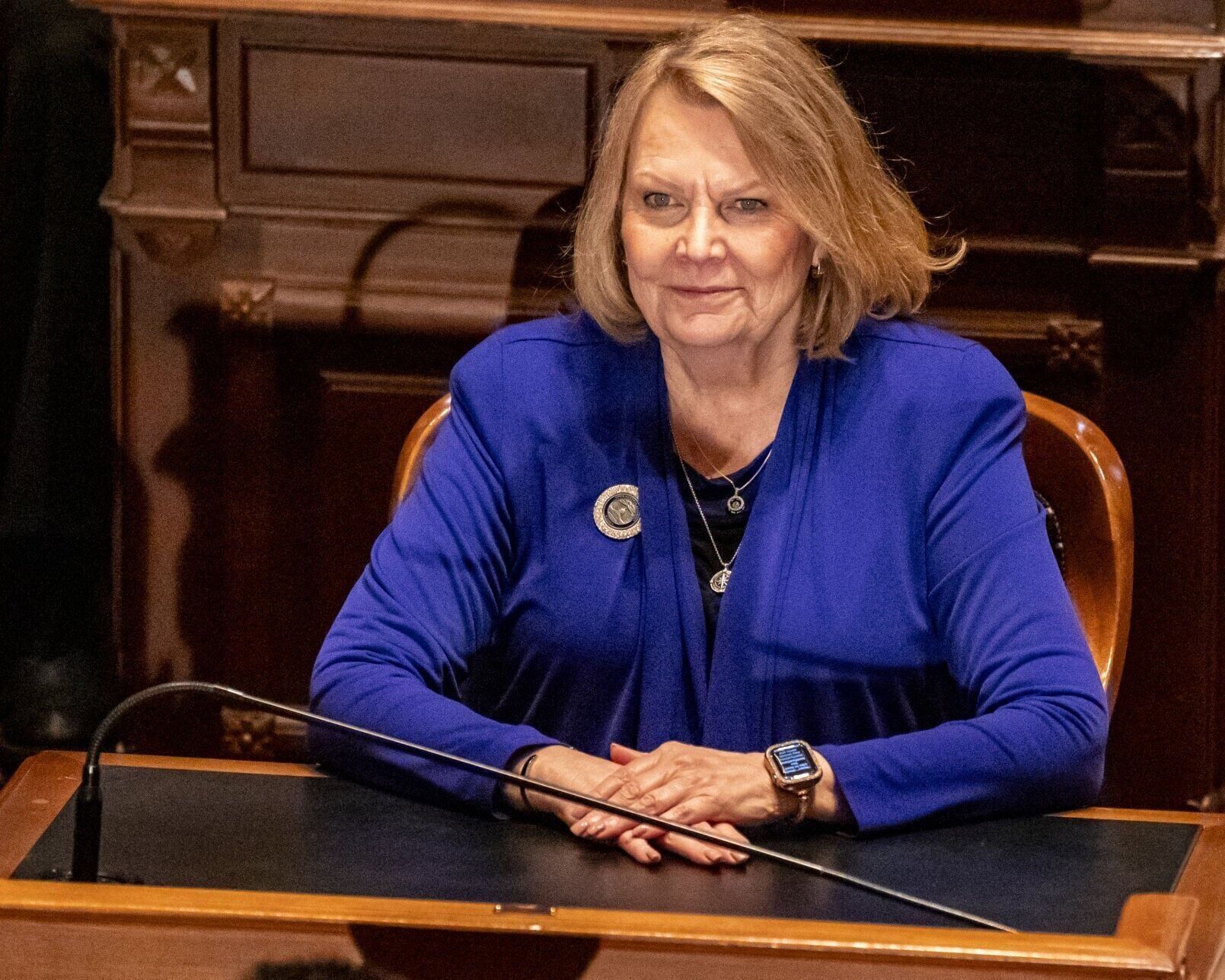
Sen. Cindy Winckler, D-Davenport, looks on during the first day
of the legislative session Jan. 13, 2025, at the Iowa Capitol in
Des Moines.
NICK ROHLMAN, CEDAR RAPIDS GAZETTE
“If this particular legislation is enacted, the Senate could adjourn and walk away from passing a budget, and also walk away from working on eminent domain or property taxes or any of the other issues that Iowans care about and want us to take care of,” Winckler told reporters Thursday.
The bill advanced, 10-8, with Republican Sens. Sandy Salmon of Janesville and Cherielynn Westrich of Ottumwa joining Democrats in voting against it.
Iowa House Speaker Pat Grassley, a Republican from New Hartford, said he understands the continuing appropriations provision is a Senate priority, but noted he will consider the proposal from a budgetary standpoint.
“I’m going to look at it from the standpoint of, regardless of what it looks like for shutdowns and the end of session, what does it look like as far as appropriators in this building, and how would that impact us?” Grassley said Thursday.
Iowa Senate advances ‘3 strikes’ bill
![]()
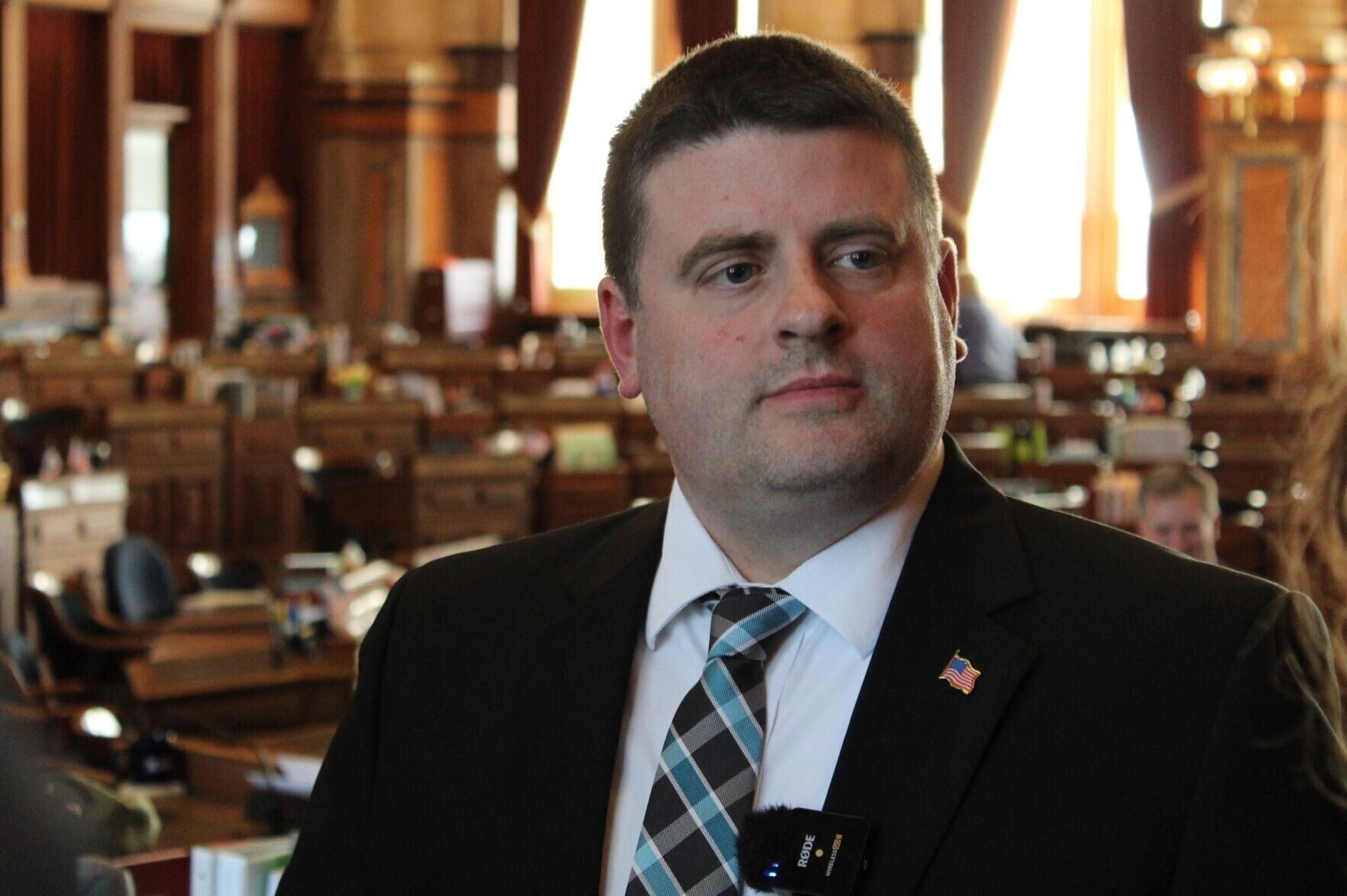
Iowa House Speaker Pat Grassley, R-New Hartford, speaks to
reporters at the Iowa Capitol in Des Moines on Thursday, March 19,
2026.
MAYA MARCHEL HOFF, QUAD-CITY TIMES
A bill creating as “three strike” system and replacing Iowa’s current repeat offender framework with a point-based system used to identify chronic offenders survived the deadline after the Senate advanced it out of committee Thursday.
Under the proposal, passed March 4 by the Iowa House, earlier convictions would earn points based on severity. Level 1 offenses — any felony conviction and specific aggravated misdemeanors, including sex offenses, assaults, certain thefts and drug possession — would count as one point each.
Level 2 offenses — all other aggravated misdemeanors and some serious misdemeanors, including assaults causing injury — would count as a half-point each.
The proposal was advanced out of committee along party lines, but Republicans and Democrats expressed concern with the bill’s estimated cost, effectiveness for rehabilitation and potential impact on prison crowding.
“Obviously, there would be tremendous cost to implementing this bill, and more importantly, I believe, is the imbalance that could occur in our criminal justice system with punishments,” said Sen Mike {span}Bousselot,{/span} a Republican from Ankeny.
Republican Sen. Jason Schultz of Schleswig, who chairs the Iowa Senate Judiciary Committee, said the chamber plans to amend the legislation to help lower the bill’s estimated cost.
The bill’s fiscal note, a nonpartisan analysis of the cost of legislation conducted by the Legislative Service Agency, states that as of March 1, the Department of Corrections’ prisons are 24.8% over capacity.
The fiscal note does not list the estimated cost of the bill, but states the fiscal impact “will be significant.”
Grassley said Thursday that there have been conversations between the two chambers on the future of the bill.
“We still feel pretty strongly that we’d like to see some sort of enhanced penalties for career criminals in the state of Iowa, so will that just be one of those things we’ll engage with the Senate on to see if there’s a path forward, or maybe a level of compromise we can have,” Grassley said.
The House’s other “tough on crime bills” did not meet the legislative deadline, including one focused on judicial performance and transparency and another implementing tighter bail standards.