

Iowa Senate spikes community college bachelor’s degree bill
A proposal to allow select Iowa community colleges — including Iowa Western — to offer bachelor’s degrees in high-demand fields is effectively dead for this session after a Senate committee declined to advance the measure Wednesday.
The Senate Education Committee chose not to move forward with House File 2649, just hours after a three-member subcommittee recommended the bill’s passage on a 2-1 vote.
The decision comes days before Friday’s second legislative “funnel” deadline, which requires most bills to clear a committee in the opposite chamber to remain eligible this session.
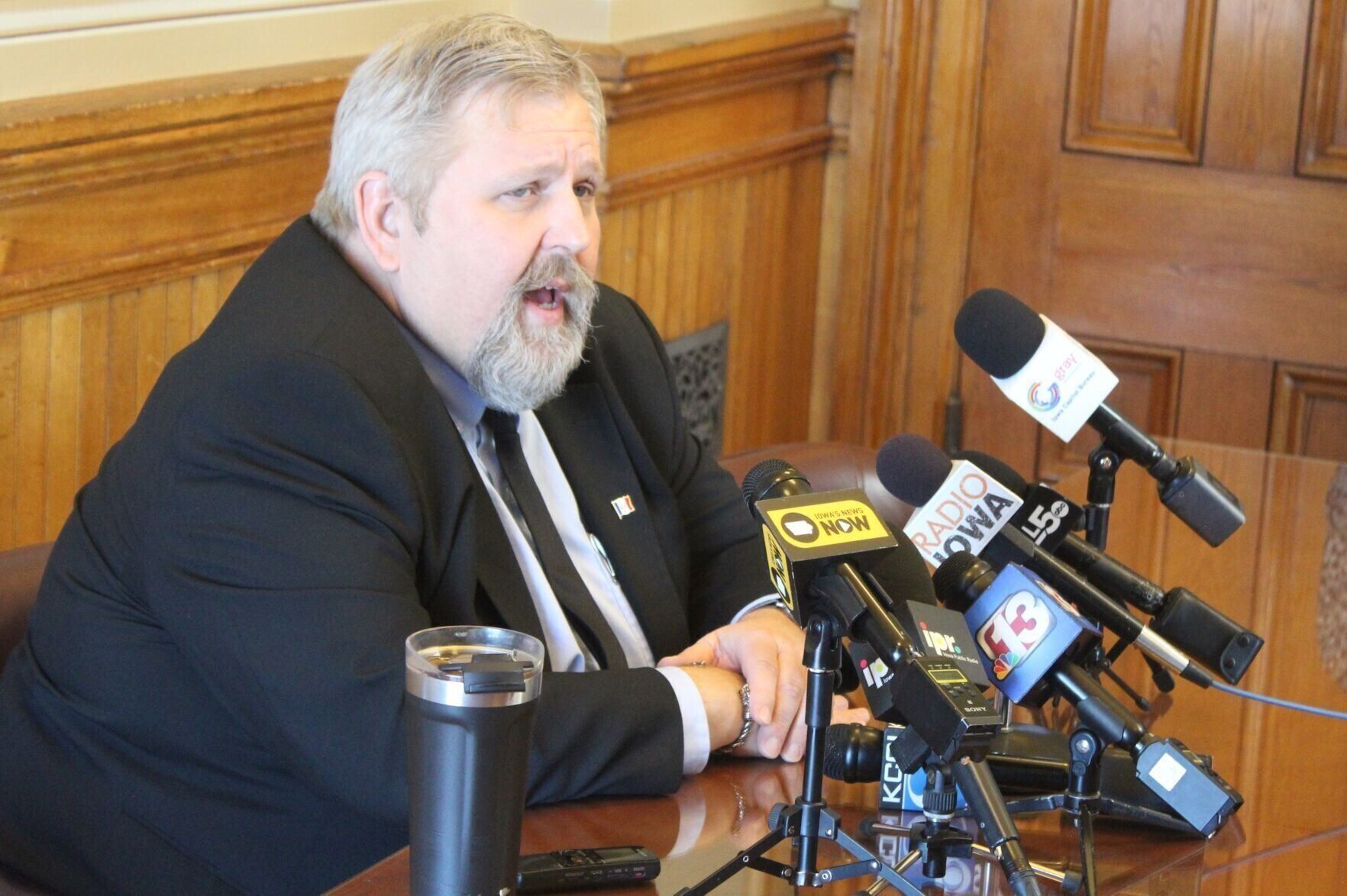
Sen. Lynn Evans, R-Aurelia and chair of the committee, said the bill lacked sufficient support among Senate Republicans to advance.
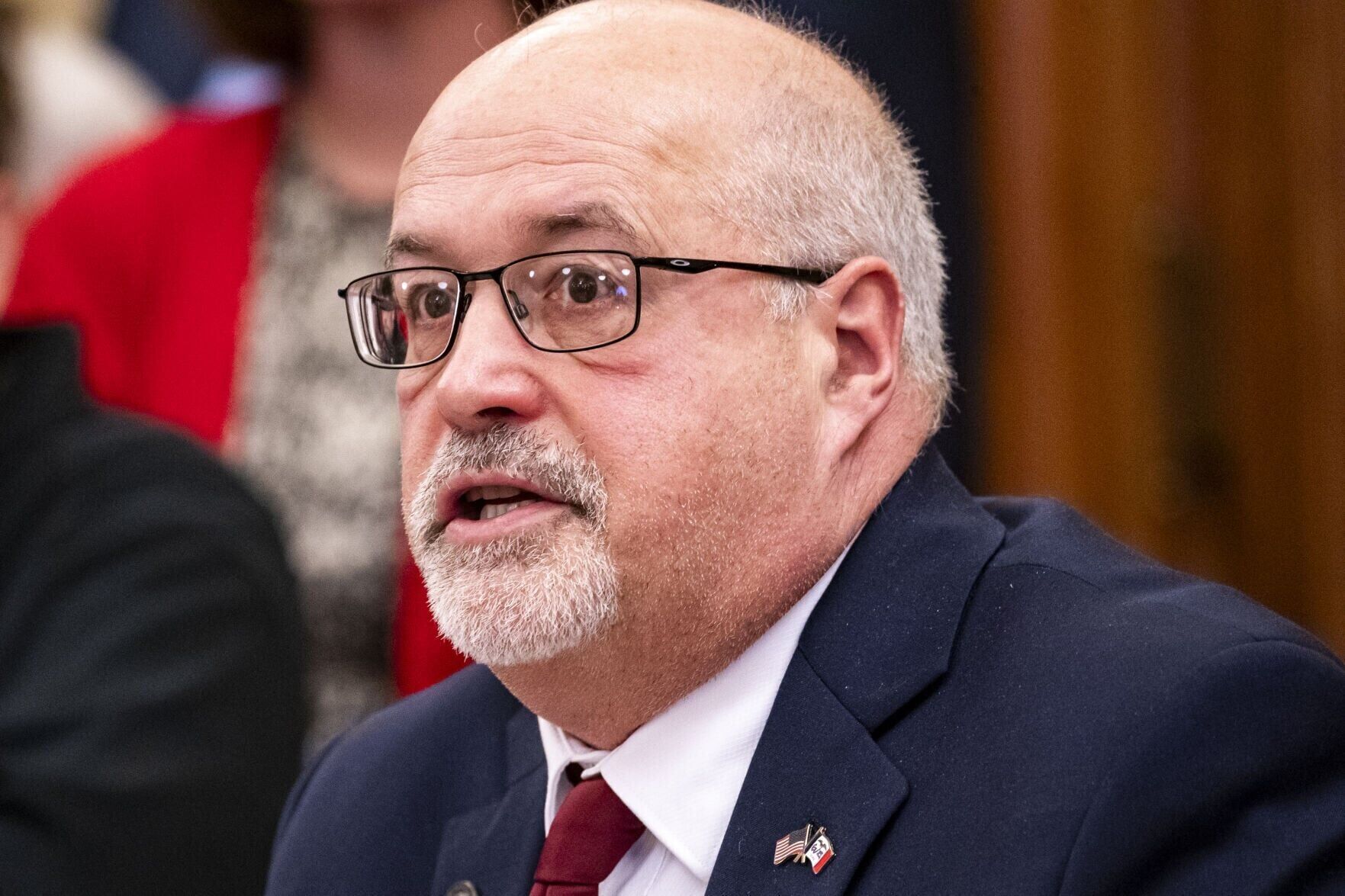
State Sen. Lynn Evans, R-Aurelia, speaks during a Senate education subcommittee hearing on Jan., 31, 2024. He said Wednesday that a proposed bill to allow select community colleges to offer bachelor’s degrees lacked enough support in the Senate for continued consideration this legislative session, though the proposal will get continued discussion.
“There was not enough support within the caucus to move the bill forward,” Evans said, adding lawmakers plan to revisit and refine the proposal during the interim before the 2027 session.
With the funnel deadline looming, however, the bill will not advance further this session — delaying any potential offering of bachelor’s degree programs by community colleges in Iowa until at least next year.
The bill previously passed the Iowa House, 56-36, earlier this month. It would have created a limited pilot program allowing colleges to offer as many as three bachelor’s degree programs each in fields facing workforce shortages. Approved fields include education, nursing, information technology, public safety, business, health care management, agriculture and dental hygiene.

Kirkwood Community College students hang out with each other in the dining area of Iowa Hall on Monday, Feb. 9, 2026. Iowa lawmakers this year were considering a pilot program that would allow the state’s community colleges to offer four-year degrees in high-demand fields, but that issue is unlikely to advance, allowing for further study later this year.
To qualify, a community college’s main campus would need to be located at least 50 miles from a public university or private college offering a similar bachelor’s degree program. Lawmakers added that restriction in response to concerns from private institutions about direct competition.
The pilot program would have been limited to five community colleges that meet that geographic requirement: Iowa Central Community College in Fort Dodge, Iowa Lakes Community College in Estherville, Iowa Western Community College in Council Bluffs, Southeastern Community College in West Burlington and Southwestern Community College in Creston.
Supporters argued the proposal would expand access to affordable four-year degrees, particularly in rural parts of the state where students may not live near a university.
Proposal has supporters
During Wednesday’s subcommittee hearing, backers emphasized the need to address workforce gaps and geographic barriers to higher education.
Margaret Buckton, representing the Urban Education Network of Iowa and Rural School Advocates of Iowa, said the proposal could help address teacher shortages by allowing paraprofessionals and other school staff to earn degrees close to home.
Community college leaders echoed that message, pointing to “education deserts” in parts of the state.
Dan Kinney, president of Iowa Western Community College, said many students in southwest Iowa leave the state for neighboring Nebraska to pursue four-year degrees due to limited local options.
Jesse Ulrich, president of Iowa Central Community College, said students in the Fort Dodge region often must relocate or rely on online programs to complete degrees — options that can be impractical or less effective for some.
“We’re putting these students at an economic disadvantage of having to leave our region,” Ulrich said.
Supporters also pointed to broader workforce trends. A study commissioned by community colleges found roughly 42 percent of jobs in Iowa require a bachelor’s degree, while only about 22 percent of residents hold one.
But the proposal faced strong opposition from Iowa’s private colleges, which warned it could undermine their enrollment and financial stability.
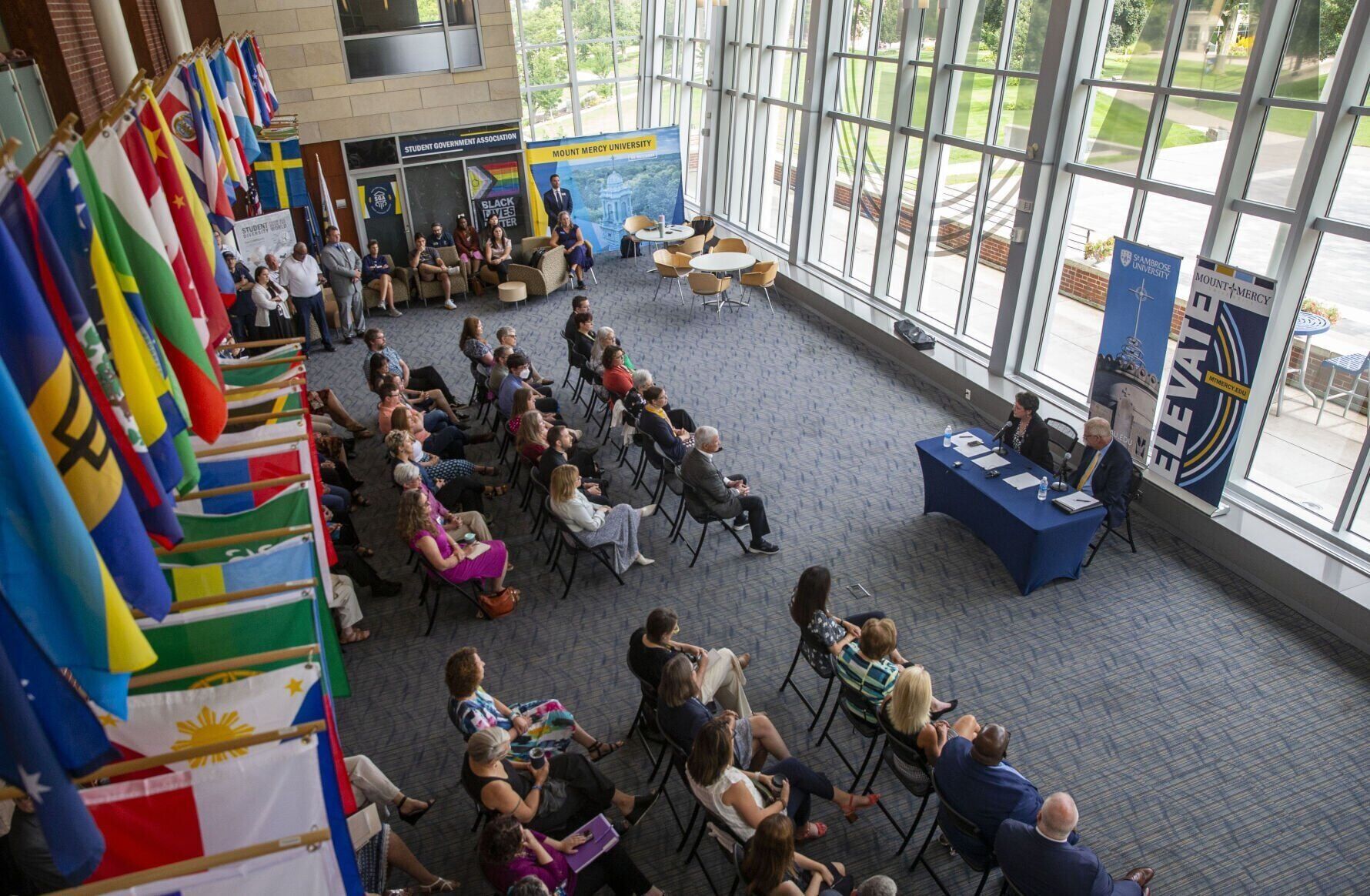
Mount Mercy and St. Ambrose staff members, students and community members listen to President Amy Novak of St. Ambrose University and President Todd Olson of Mount Mercy University talk about the two schools combining during an Aug. 1, 2024, news conference at the Mount Mercy University campus in Cedar Rapids.
Jim Obradovich, speaking on behalf of Faith Baptist Bible College in Ankeny, said the bill would place community colleges in direct competition with smaller institutions, particularly in education programs.
Frank Chiodo, representing the Iowa Association of Independent Colleges and Universities, argued the state already has sufficient access to four-year programs and questioned whether the bill addressed a clear problem.
“We think this is a solution looking for a problem,” Chiodo said, warning that expanded offerings at community colleges could financially strain private colleges and potentially lead to closures.
Opponents also raised concerns about costs and implementation, noting uncertainty around accreditation requirements, faculty hiring and infrastructure needs. While a state analysis estimated relatively modest administrative costs, a separate study suggested launching programs could require up to $20 million over five years.
Maya Marchel Hoff of the Lee-Gazette Des Moines Bureau contributed to this report
Related

State Rep. Josh Turek discusses support for four-year degrees at Iowa Western during a legislative public forum in Council Bluffs on Saturday,…