

Property taxes loom over 2026 legislative session as lawmakers aim to provide relief
This year, Iowa lawmakers will return to the drawing board on providing property tax relief to Iowans, which is expected to be a main focal point of the 2026 legislative session after last year’s efforts to address the issue failed to take off.
Lawmakers have made a few attempts in the last few years to provide property tax reform, including a law passed in 2023 merging levies and a proposal introduced in 2025 to overhaul Iowa’s property tax system.
While last year’s property tax proposal emerged roughly halfway through the session, Republican leaders of both chambers and Gov. Kim Reynolds are preparing to come out of the gates this month with their own plans to tackle rising property tax rates, an issue they say plagues most Iowans.
The 2026 legislative session begins on Jan. 12.
Iowa ranks 33rd in property tax competitiveness, according to the non-partisan Tax Foundation.
All Iowa legislative leaders agree that something must be done to provide property tax relief to Iowans, but it is yet to be seen how their plans align and where disagreements may arise.
Components of reform that hang in the air include whether the state should cap local government revenue, potential shared service models for local governments and whether to shift state education funding from the local level to the state.
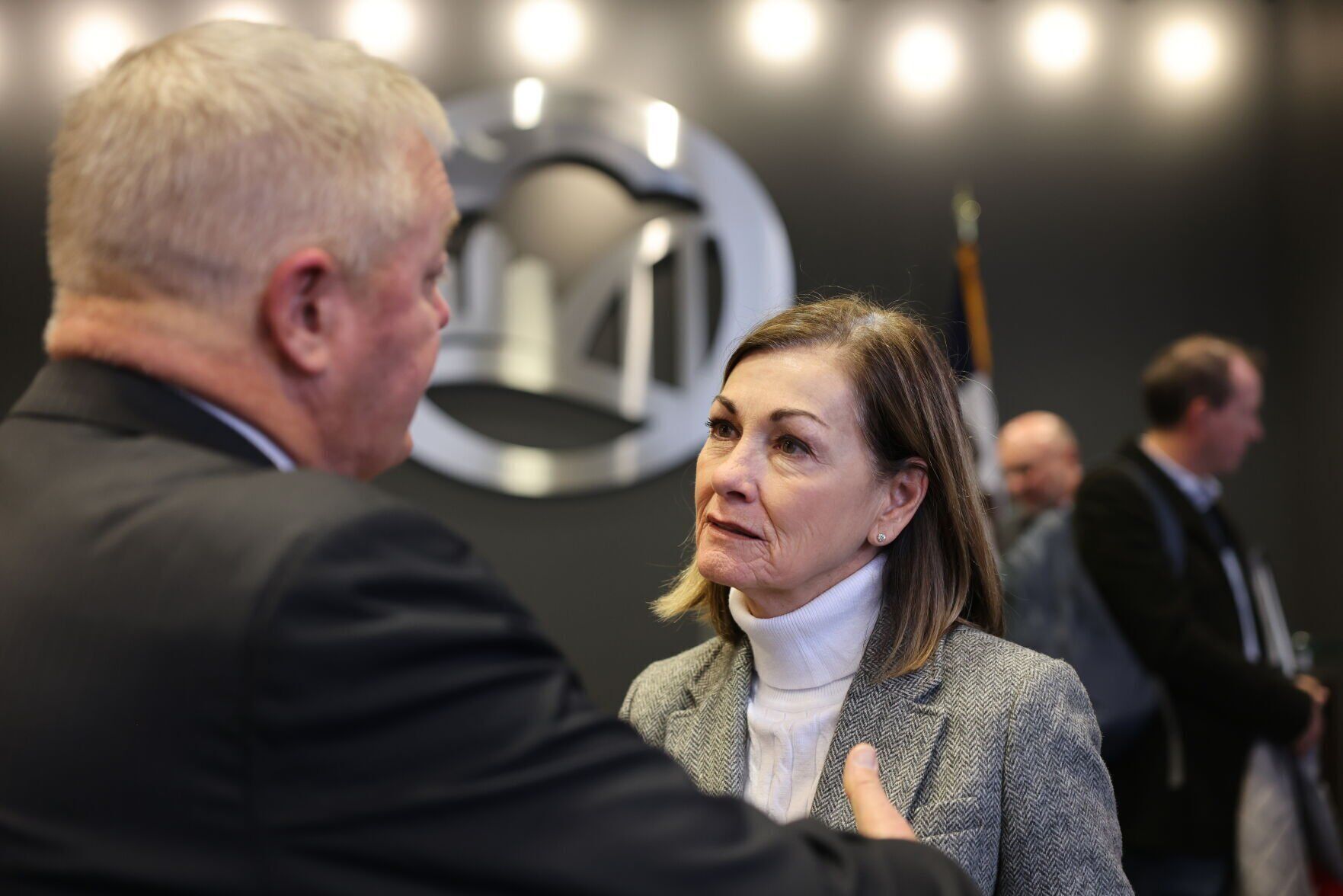
Iowa Gov. Kim Reynolds speaks with Scott County Supervisors chair John Maxwell, Nov. 18, 2025, at the Quad-Cities Chamber in downtown Davenport.
Over the past few months, Reynolds has traveled the state to talk with stakeholders, business leaders and local governments about how to best address property taxes.
Across these meetings, she expressed interest in shared service models between local governments and a potential 20-year sunset for agreements for tax increment financing, or TIF, which is a tool used by local governments to incentivize developers to build in certain areas by diverting property taxes on increases in property values to improvements in the district, including infrastructure.
Reynolds, who is not running for reelection, declined to be interviewed for the Lee-Gazette Des Moines Bureau legislative preview series, but spoke about property taxes at her annual state budget hearing on Dec. 19.
At the hearing, Reynolds said the 2026 session should be a “robust legislative session working through how we can reduce property taxes for Iowans.”
Iowa House Speaker Pat Grassley said the House GOP’s proposal will be “digestible” and simple to help make the complicated property tax system easier to understand and provide “certainty” to taxpayers.
“We all agree this is something that's before us that we have to be able to tackle this session, and so from us starting from that standpoint, to find a place in which we can get something done, I think that that's been pretty positive in our initial lead-ups to session,” Grassley told the Lee-Gazette Des Moines Bureau.
During the 2025 session, Republicans Rep. Bobby Kaufmann of Wilton and Sen. Dan Dawson of Council Bluffs, who served as the respective chairmen of their chambers' Ways and Means Committees that write tax policy, introduced a proposal to overhaul Iowa’s property tax system.
The legislation, which failed to garner enough support to get to the floor for a vote, would have phased out the state’s property tax rollback over 10 years and shifted about $426 million in K-12 funding from local property taxes to the state.
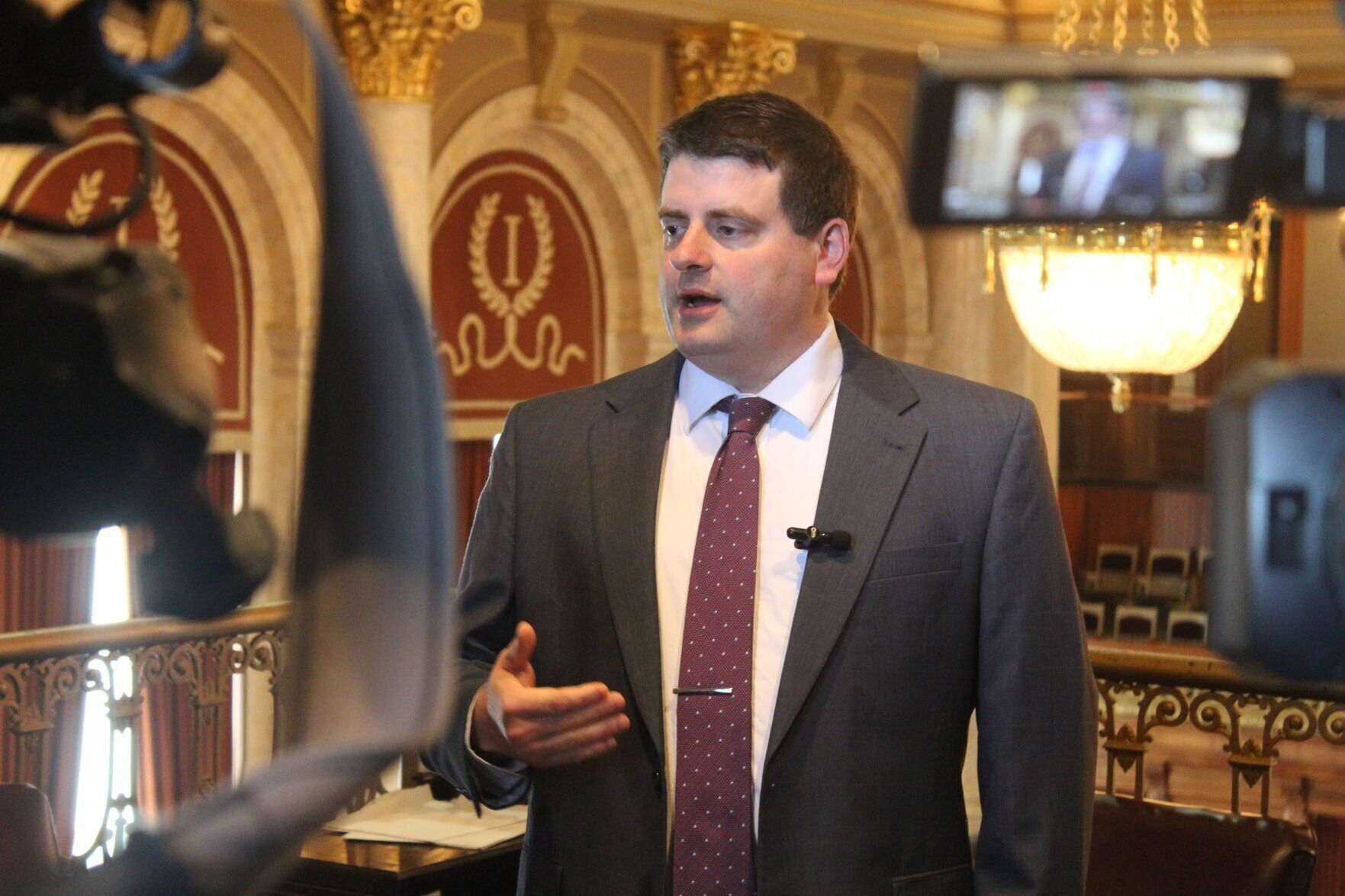
Grassley
While Grassley didn’t rule out components of last year’s proposal remaining in the House’s plan this year, he says his chamber’s proposal will look different.
Iowa Senate Majority Leader Mike Klimesh, R-Spillville, said he is expecting both chambers and the governor’s office will present their proposals in January and will work across the session to reach a consensus. While he didn’t share any specifics of the Senate’s plan, he said conversations with various stakeholders will determine what a property tax relief package could look like.
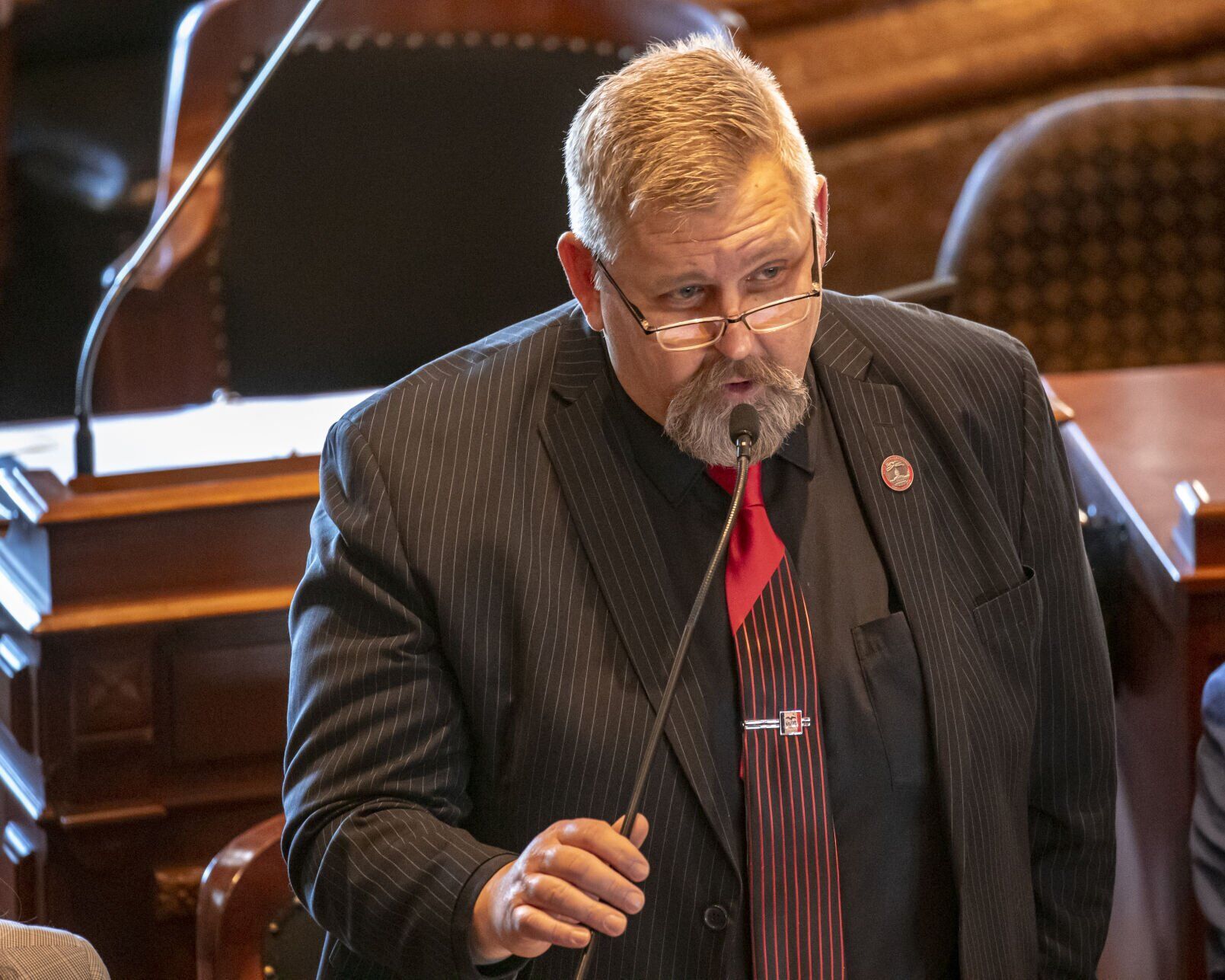
Sen. Mike Klimesh, R-Spillville, speaks during the first day of the legislative session at the Iowa State Capitol in Des Moines on Monday, Jan. 13, 2025.
“The conversation will be, we have a 40-year-old system, we select a lot of mandates on that system. Is there value in tearing it down to the chassis and rebuilding it?” Klimesh told the Lee-Gazette Des Moines Bureau. “We have to be aware, no matter what we do, that we don't squeeze a balloon unintentionally somewhere. So we don't reduce property taxes on one class while we unintentionally increase property taxes on another class.”
Taxpayer groups weigh in
While Iowa Republican lawmakers have yet to release their property tax relief proposals, business leaders and taxpayer groups across the state are pressing the case for tighter local government revenue caps.
During Reynolds’ budget hearing in December, Chris Hagenow, president of Iowans for Tax Relief, told Reynolds that frustration over rising bills is widespread.
“Iowans are incredibly frustrated, and the problem seems to be getting worse for them,” he said, arguing that “the growth in local governments and their property taxes is growing faster than Iowans' ability to pay.”
While acknowledging the system is complex, Hagenow said the answer isn’t in changing the mechanics but in lowering the burden itself. The group is calling for a firm, across-the-board 2% cap on local governments’ year-to-year growth in property tax revenues, aimed at preventing what advocates call end-runs around existing limits.
“There can't be any loopholes or carve-outs for that, because, as we have seen over and over, if you create an escape hatch, local governments will find … another way to collect that revenue,” he said, tying the idea to the broader question of “how much are Iowans being asked to pay? What is their total cost of government?”
Reynolds, responding to Hagenow’s call to focus on the “total cost of government,” said the administration is framing the property tax debate around overall spending and duplication of services across levels of government.
Klimesh, who previously served as the mayor of Spillville, said he understands the importance of adequately funding local governments, but added that finding ways for jurisdictions to find the best return on investment for the taxpayer dollar — which could include combining services — is essential to lowering property taxes.
“We want to make sure that those tax dollars are being spent as frugally and wisely as possible, and at the same time, maintaining levels of services that those residents in those jurisdictions have come to expect,” Klimesh told the Lee-Gazette Des Moines Bureau. “There is value in that conversation.”
Republican Rep. Carter Nordman, of Adel, who was recently appointed chair of the House Ways and Means Committee, told reporters that more focus should be on the taxpayers as he joined Reynolds at her October property tax round table in Dallas Center.
“We talk so much about the government entities, the ones who are collecting the taxes. But we don’t talk enough about the people who are paying them,” Nordman said. “And when we talk about sustainability, well, it’s not becoming sustainable for the 85-year-old woman who can no longer afford to live in her home on a fixed income. So we’ve got to talk about the taxpayer and make sure they are the ones in the driver’s seat during these conversations.”
In November, Reynolds said her office is considering a property tax freeze for seniors, as many across the state continue to face economic uncertainty.
But Iowa Taxpayer Association President Nate Risdow said while a property tax freeze for seniors and other vulnerable groups could provide “straightforward” relief, it will not help untie the “big knot” Iowa’s current system is tied up in.
“You can freeze, you know, property tax bills for certain groups,” Risdow said. “That provides simple, straightforward relief. But that doesn't really make the system more neutral and fair. It doesn't make the system any less complicated, and actually just probably adds another layer of complication.”
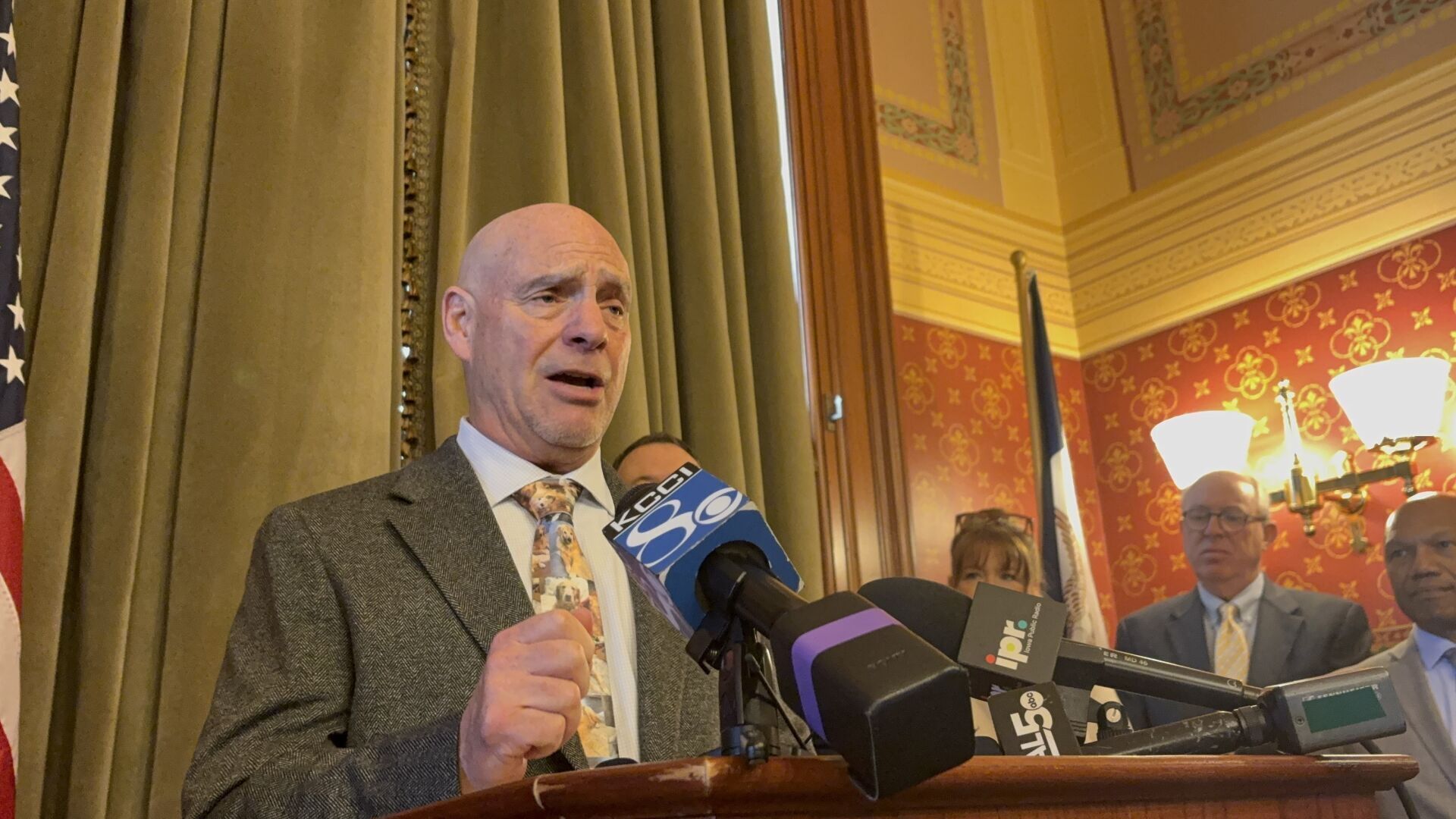
Rep. Dave Jacoby, D-Coralville, speaks with reporters on March 27, 2025, at the Iowa Capitol about House Democrats' proposal to lower property taxes for Iowa homeowners, seniors and renters.
House Democrats to introduce proposal
Given their position in a legislature where Republicans hold the majority, Iowa House and Senate Democrats understand their role in crafting a property tax relief proposal will be limited.
Iowa Senate Minority Leader Janice Weiner of Iowa City said her caucus will be “closely vetting” Republican proposals, adding that any reform needs to balance providing relief to elderly, lower and middle-class Iowans with allowing local governments to continue providing services.
“It's a very complex system. Something that makes it simpler, more transparent and easier to understand, and a system that will actually help the Iowans who need it … while at the same time not using reform as a code word for let's give more money to the big corporations,” Weiner told the Lee-Gazette Des Moines Bureau. “Local government still needs to be able to do its job and fund public safety and other essentials.”
On the other side of the rotunda, House Minority Leader Brian Meyer, of Des Moines, said the Democrats are finalizing their own property tax proposal spearheaded by Rep. Dave Jacoby, of Coralville, the ranking Democrat on House Ways and Means. Jacoby warned that the crowded field of ideas could complicate the debate.
“There's so many different proposals that it's hard to tell which one may gain traction, and the governor has not released what hers looks like, right?” he said, emphasizing the need for effective proposals that benefit homeowners and renters without burdening cities, counties and schools.
He also cautioned against squeezing local budgets that fund public safety, saying, “If we truly want to back the blue, we can't keep cutting the green.”
Jacoby said House Democrats’ approach would resemble past proposals by focusing on limiting what taxpayers owe each year rather than altering property values.
“Instead of trying to mess with home valuations, which I think is tremendously dangerous, I think what you do is just control or limit what people's liabilities are," he said. Under that concept, even if valuations spike, “do you make sure that no matter what you paid last year in property taxes, that next year you don't pay more than 4% or 5% (more) of what you paid last year?”
He said Democrats would also keep the rollback but reset it “so that people are paying on 50% of their valuation” to provide certainty year to year.
With Reynolds hosting property tax roundtables and Republican leaders signaling renewed talks, both sides agree the issue will dominate the Iowa Capitol. As Jacoby put it, “property taxes will be your top headline” — setting up what could be the defining fight of the 2026 session.
Erin Murphy of the Lee-Gazette Des Moines Bureau contributed to this report.