Future state spending may need to be reduced to match lower revenue being brought in by the state, Iowa Republican gubernatorial candidate Randy Feenstra said Tuesday in an interview.
State revenues in Iowa have been lower than state spending levels over the past two years, largely as a result of a series of state income tax rate reductions enacted over the past seven years.
Majority Republican state lawmakers have been using state general fund surplus and reserve funds — which they set aside when enacting those tax cuts — to cover the state budget shortfall until state revenue catches up to spending levels.
In the state budget year that starts July 1, Iowa is expected to collect more than $1 billion less than expected spending.
The two main sources that Statehouse Republicans have been using to cover state budget shortfalls — the general fund budget surplus and the Taxpayer Relief Fund — contain $1.5 billion and $3.1 billion, respectively, in the current budget year, according to recent estimates from the nonpartisan Legislative Services Agency.
![]()
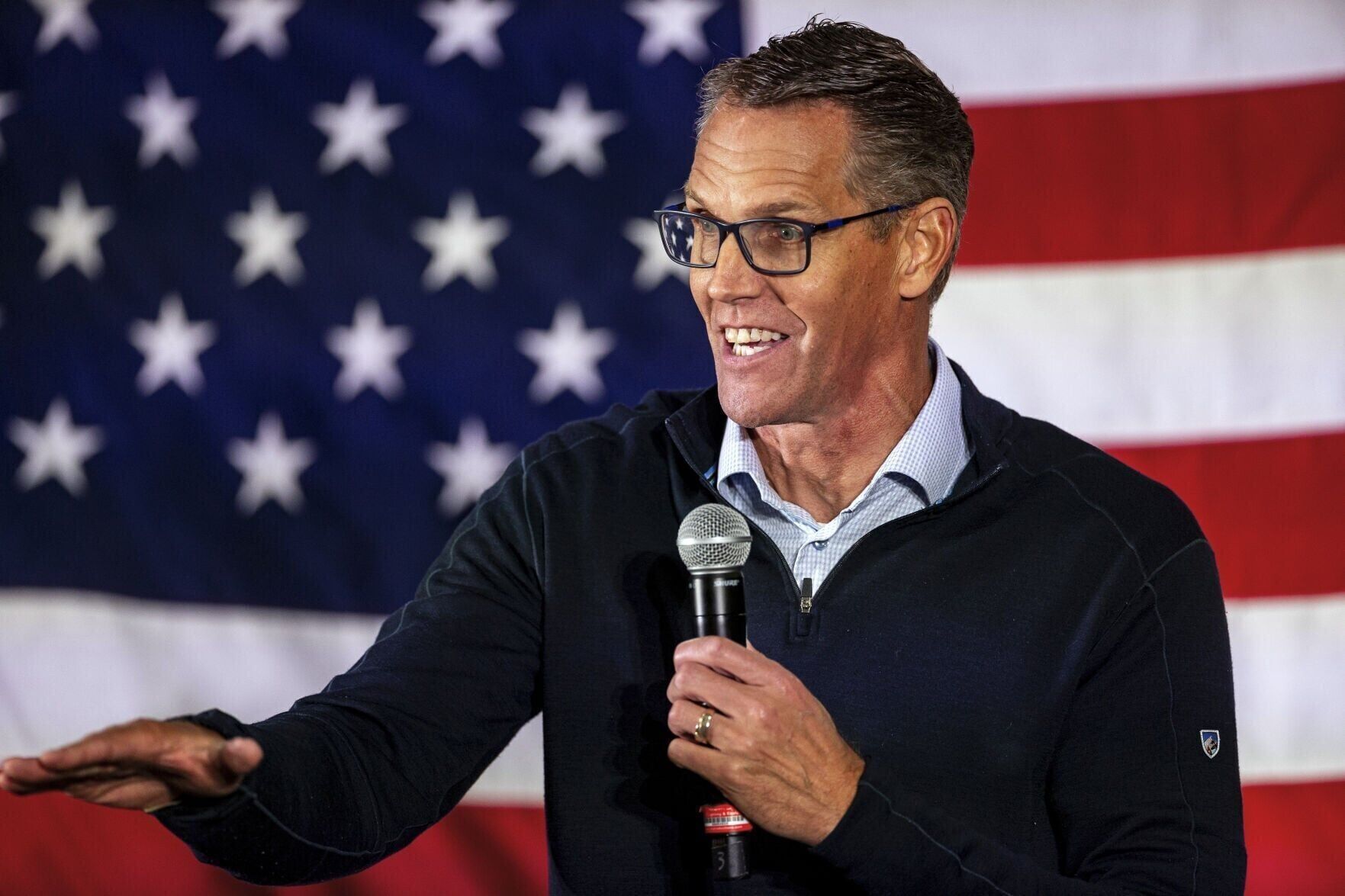
U.S. Rep. Randy Feenstra, R-Iowa, speaks during the Triple M
Tailgate fundraiser for U.S. Rep. Mariannette Miller-Meeks, R-Iowa,
on Oct. 24, 2025, in Iowa City.
Nick Rohlman, Cedar Rapids Gazette
Feenstra, a former state lawmaker who chaired the Iowa Senate’s tax policy committee, said Tuesday that he firmly believes in the budgeting principle of not using one-time sources to fund annual or ongoing expenses. Feenstra said he believes using the Taxpayer Relief Fund to cover state budget shortfalls violates that principle.
Feenstra said the state law limiting spending to 99% of state revenues "means that you can’t use one-time money to fill the hole.”
“That only goes so long so far,” Feenstra said. “That’s a very dangerous, slippery slope. I fully believe that we have to get back to a sound fiscal budget.
“I get that we have the taxpayer trust fund, but I would rather see that money stay with the taxpayer than having a slush fund that we can do and decide what we want to use it for each and every year.”
Asked if that means that if state revenues do not catch up to current spending levels, then the state should reduce spending, Feenstra said: “Yeah, absolutely.”
“I think we have to get to a balanced budget. We might have to reduce spending,” Feenstra said. “We have to have fiscal responsibility and fiscal control. We have to create a responsibility. And for my budgets, it will be, ‘This is what we’re taking in, and this is what we’re going to spend.’”
Feenstra is one of five Republicans seeking the party’s nomination for governor in Iowa’s June 2 primary. Also seeking the nomination are former state agency director Adam Steen of Runnells, state legislator Eddie Andrews of Johnston, business owner Zach Lahn of Belle Plaine, and pastor Brad Sherman of Williamsburg.
Republican incumbent Gov. Kim Reynolds, who has held the post since 2017, is not seeking reelection. State Auditor Rob Sand of Decorah is the lone Democratic candidate,
![]()
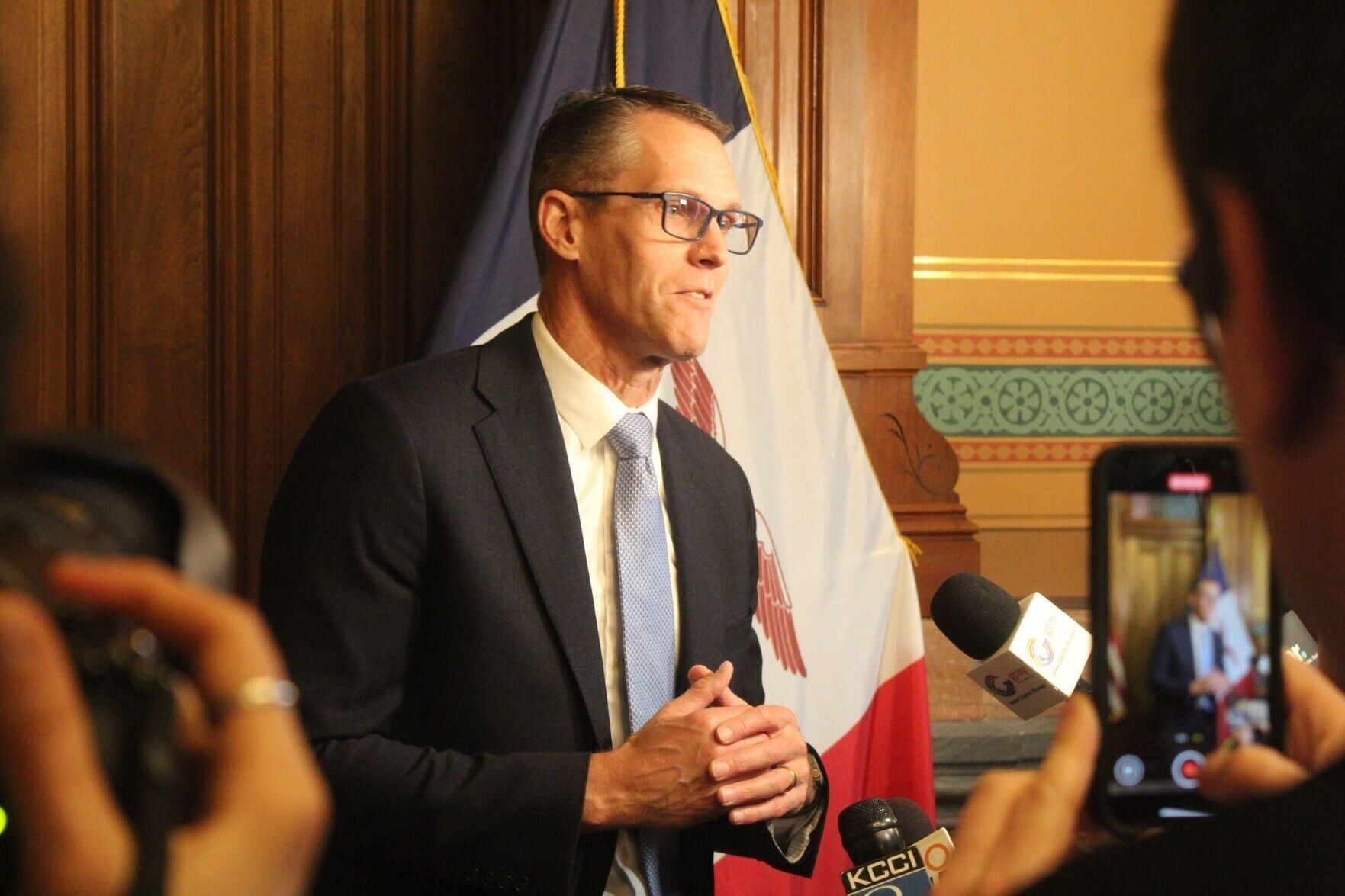
Iowa Republican gubernatorial candidate Randy Feenstra speaks to
reporters after filing his nominating paperwork March 9, 2026, in
the Iowa Secretary of State’s Office at the Iowa Capitol in Des
Moines.
Erin Murphy, Cedar Rapids Gazette
Feenstra avoids Steen, Andrews spat
Asked whether he believes Steen should withdraw from the campaign — as Andrews called for after Steen’s campaign staff helped a donor file an ultimately unsuccessful challenge to Andrews’ candidate nominating petitions — Feenstra stayed out of the fray.
A Steen donor and supporter challenged some of the nominating signatures in Andrews’ candidate filing paperwork, but the State Objection Panel accepted enough signatures to keep the count above the requirements in state law and preserve Andrews’ spot on the primary ballot.
Steen’s campaign originally said the donor’s decision to challenge Andrews’ signatures was made independently of the campaign, but the campaign’s statement failed to note that staff helped the donor with the process.
While speaking at a county party event last week in which Steen also appeared, Andrews said Steen should drop out.
“I’ll tell you exactly where I stand: I truly believe that anybody who wants to run and meets the qualifications to get on the ballot should be able to run. I’m not a stickler with this,” Feenstra said. “For me, I’m simply focused on defeating Rob Sand. … Whoever makes the ballot, that is awesome. Good for them. But for me, it’s a focus about winning and becoming the next governor.”
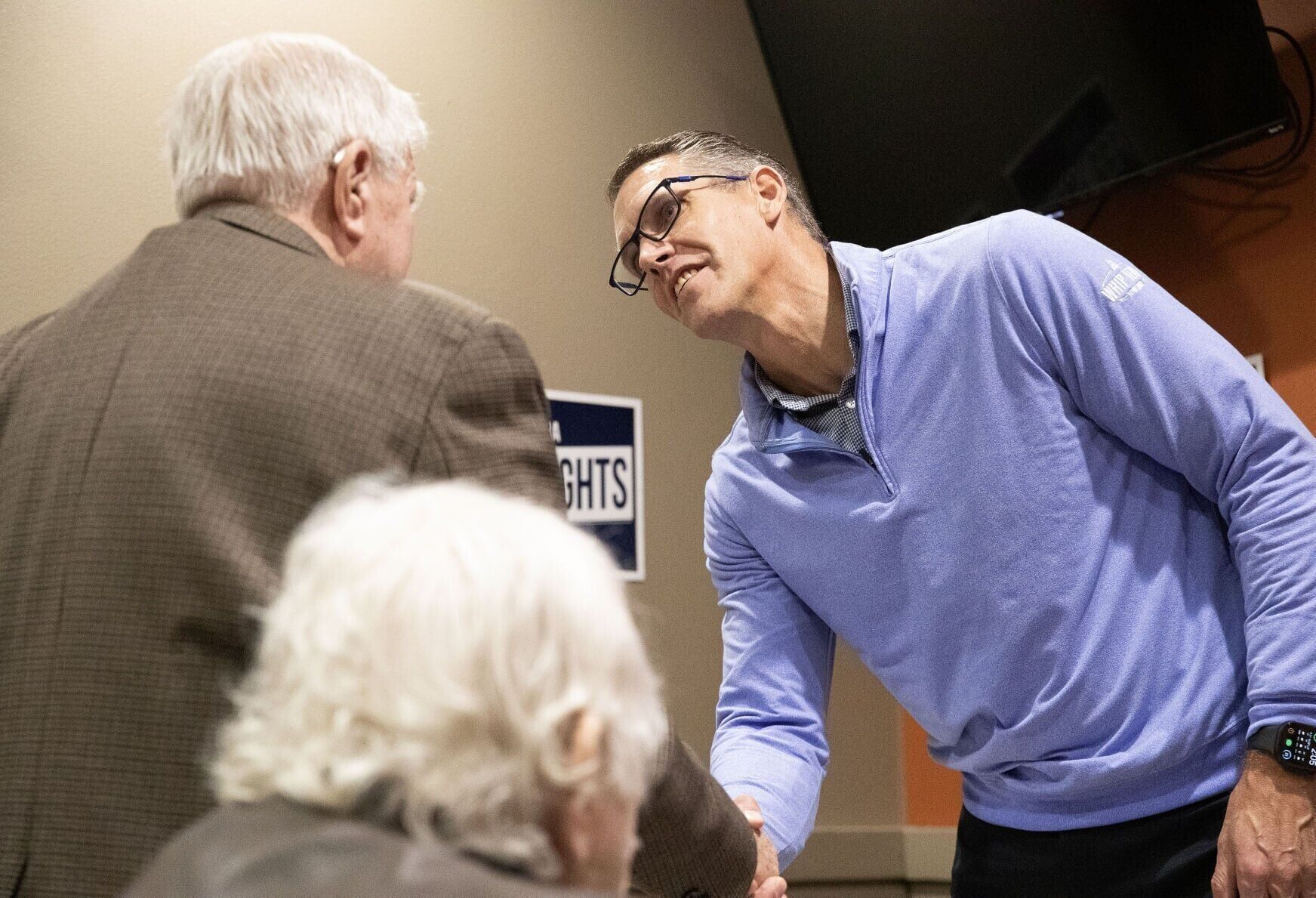
![]()
Iowa U.S. Rep. Randy Feenstra, a Republican candidate for
governor, greets Bill Kettel, of Iowa City, during Feenstra’s meet
and greet in December 2025 at Pizza Ranch in southwest Cedar
Rapids.
Elizabeth Wood, Cedar Rapids Gazette
Feenstra avoids joint appearances
Feenstra said he continues to campaign and meet Iowans across the state.
While he has been criticized — including by some of his fellow Republican candidates — for not appearing in multicandidate events and forums, Feenstra is meeting with voters. He joked that he has been eating at a lot of Pizza Ranch restaurants.
The issues Feenstra hears about most frequently are property taxes, education and health care.
“For me right now it’s about talking to the people of Iowa, earning each individual’s vote. I’m listening and then telling them my vision,” Feenstra said. “It’s just great for me to have 25 to 30 people in a room and they’re asking me questions, and I can give answers to them so they know exactly where I stand. That is our focus right now.”
Randy Feenstra shares 4 points in campaign for governor during Council Bluffs visit