Our long, hot summer is finally coming to an end this evening with the autumnal equinox, which marks the beginning of fall here in the Northern Hemisphere.
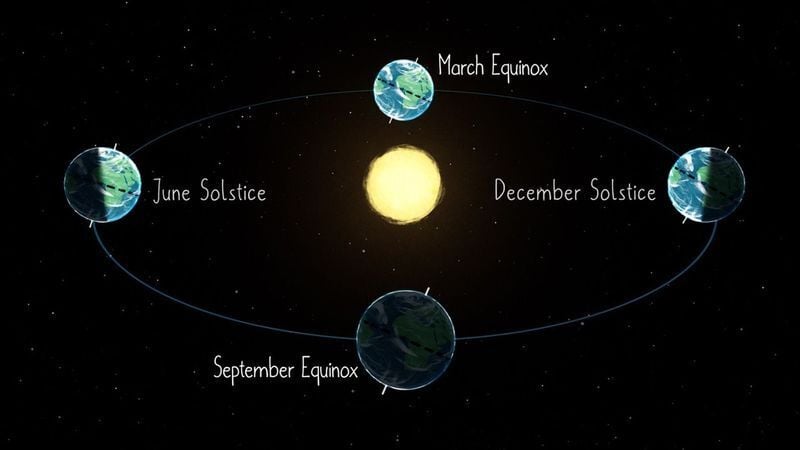
Earth's tilt leads to the Northern and Southern Hemispheres receiving changing amounts of sunlight over the course of the year, this NASA graphic illustrates. During the equinoxes in fall and spring, neither hemisphere is more tilted toward the Sun, so both receive the same amount of sunlight.
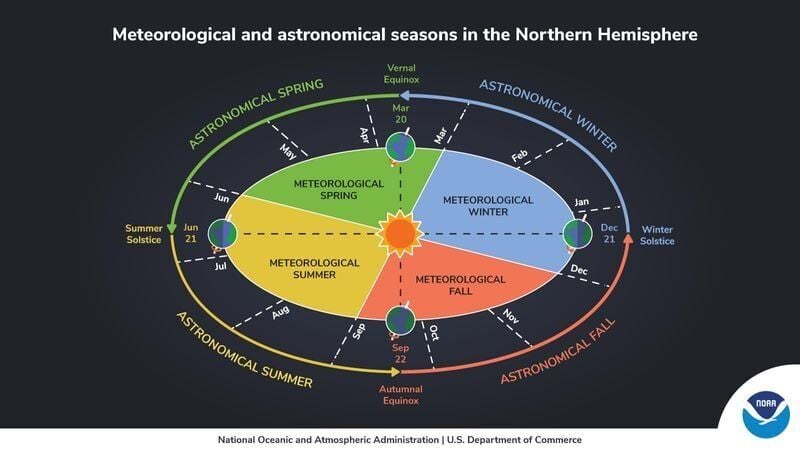
Meteorological seasons are grouped by three months and closely follow the calendar, while astronomical seasons are defined by two solstices and two equinoxes based on the Earth's position around the sun.
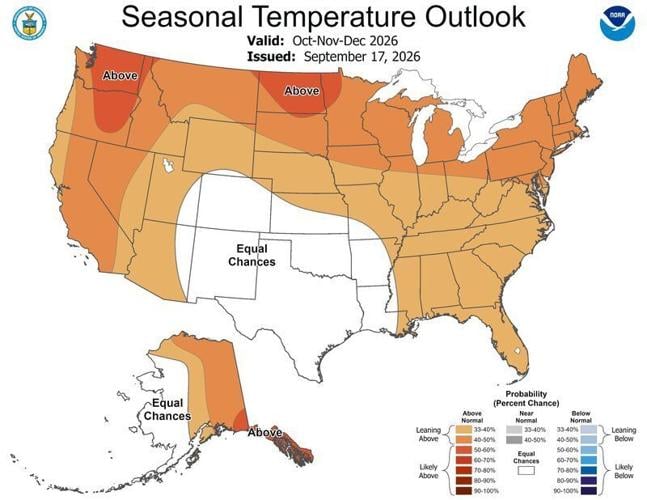
Much of the country is forecast to see warmer than normal temperatures this fall, according to the forecast from the National Oceanic and Atmospheric Administration.
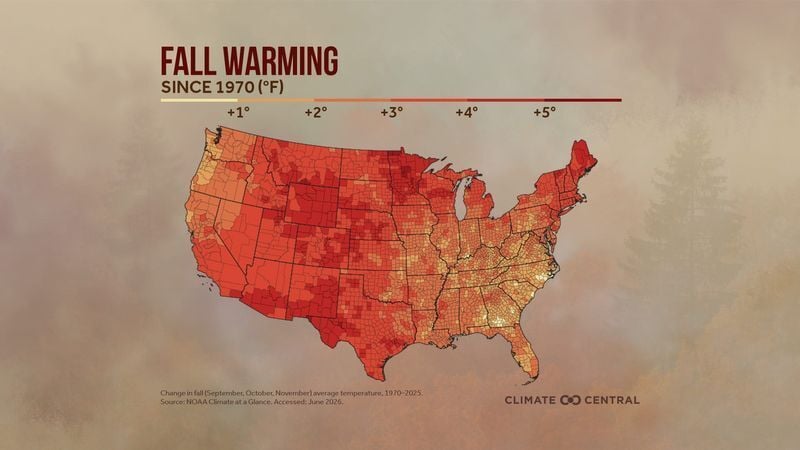
A study by Climate Central found that since 1970, the average number of warmer-than-normal fall days has increased in 98% of the 245 cities analyzed in the United States.
Earth's tilt leads to the Northern and Southern Hemispheres receiving changing amounts of sunlight over the course of the year, this NASA graphic illustrates. During the equinoxes in fall and spring, neither hemisphere is more tilted toward the Sun, so both receive the same amount of sunlight.
Much of the country is forecast to see warmer than normal temperatures this fall, according to the forecast from the National Oceanic and Atmospheric Administration.
A study by Climate Central found that since 1970, the average number of warmer-than-normal fall days has increased in 98% of the 245 cities analyzed in the United States.
Meteorological seasons are grouped by three months and closely follow the calendar, while astronomical seasons are defined by two solstices and two equinoxes based on the Earth's position around the sun.